Medical textbooks are extraordinary repositories of knowledge. They are also dense, complex and often difficult to navigate.
A single chapter may contain decades of scientific discovery, competing theories, unfamiliar terminology and hundreds of individual facts. Learners can reach the end of a chapter having read every word, yet still struggle to see the larger picture.
The Clinical Deep Dives were created to bridge that gap.
They take substantial, text-heavy source material and transform it into structured conceptual journeys. Important ideas are drawn together across chapters and, where appropriate, across multiple seminal texts.
The purpose is not simply to shorten the textbook.
It is to reveal the architecture hidden within it.
Each Deep Dive asks:
What is the central idea?
How do the different concepts connect?
Which mechanisms must genuinely be understood?
What makes the subject memorable?
Why will this knowledge matter in clinical practice?
Your Conceptual Companion
The Clinical Deep Dives are designed to sit beside formal teaching, lectures and textbooks.
They do not replace the source material. They help learners enter it with a clearer map.
A good companion does not walk the road for you. It helps you notice the landscape, understand the difficult turns and recognise which paths matter most.
Each Deep Dive may include:
- clear explanations of difficult concepts
- connections between ideas that are often taught separately
- memorable metaphors and analogies
- mechanisms explained in logical stages
- clinical examples that reveal why the science matters
- memory frameworks for dense or unfamiliar material
- distinctions between concepts that are commonly confused
- recurring themes that help learners organise knowledge
- questions that encourage deeper reflection and reasoning
The result is learning that is not merely retained for an examination, but carried forward into clinical thinking.
Three Schools of Medical Science
Sciences is organised into three interconnected schools.
They represent a progression from understanding the healthy body, to understanding disease, to applying that knowledge in patient care.
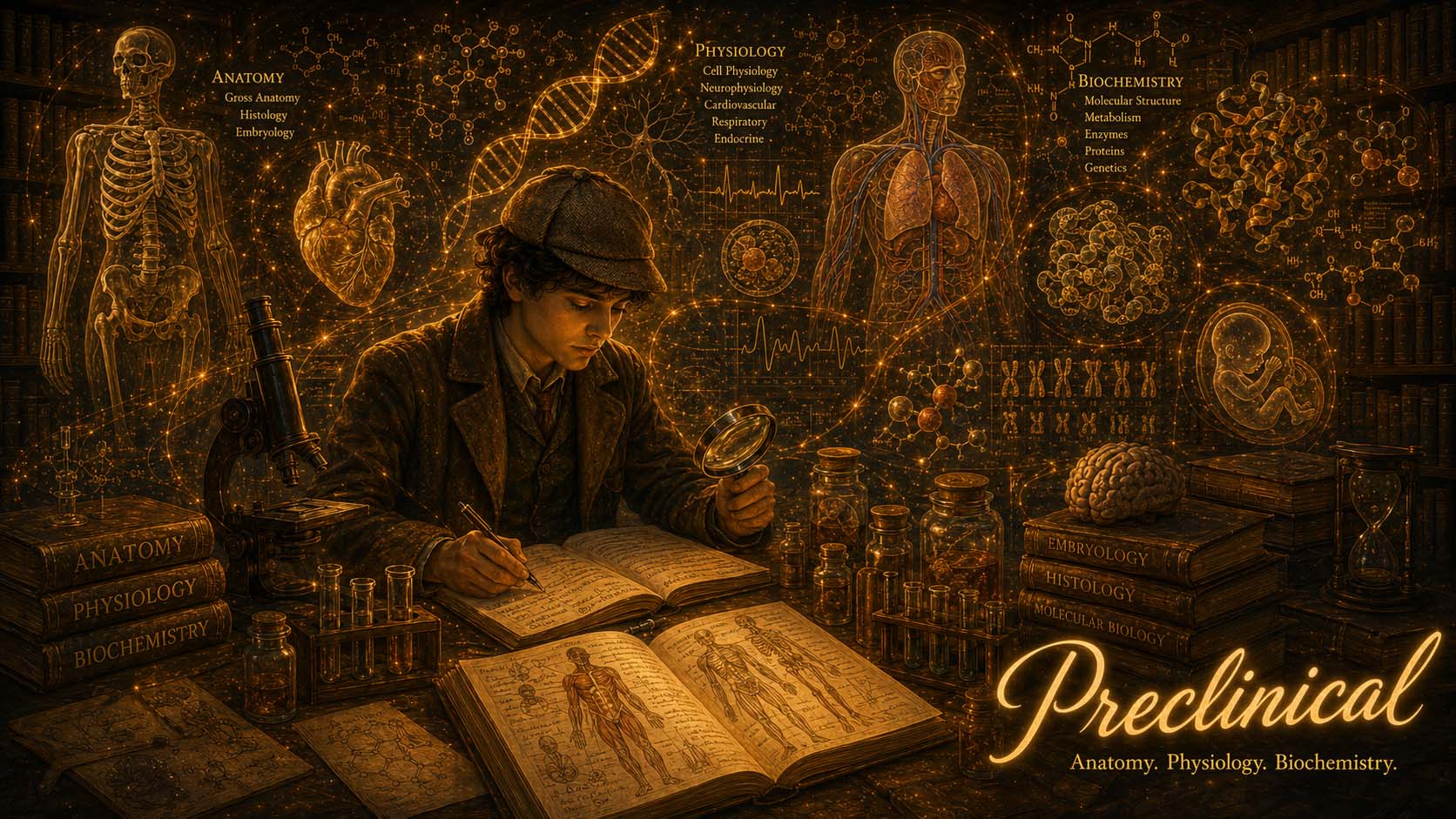
PRECLINICAL SCIENCES
Building the language of medicine.
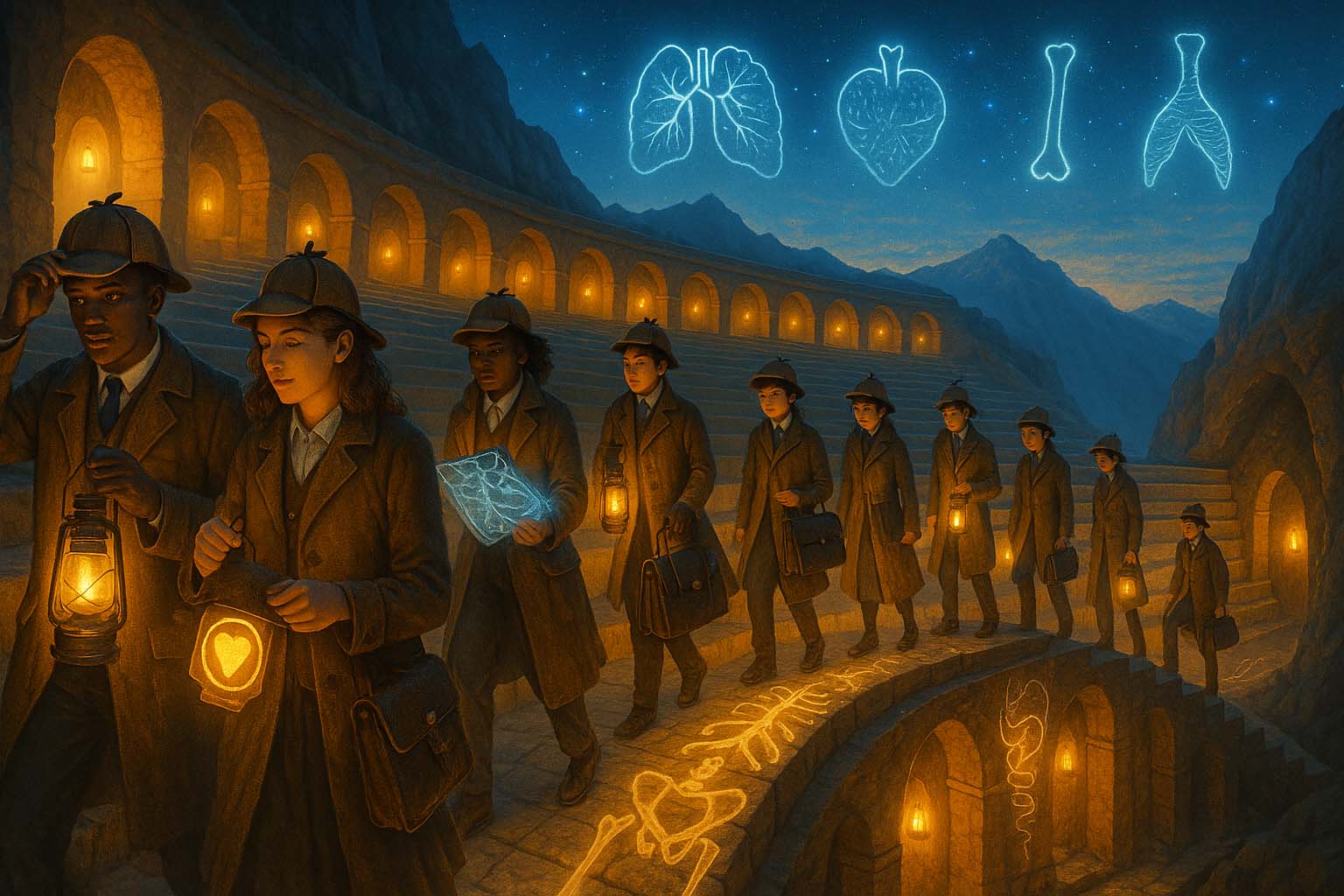
The preclinical sciences reveal how the human body is constructed, organised and sustained.
They provide the vocabulary and grammar from which later clinical understanding grows.
The principal disciplines include:
- Anatomy
- Physiology
- Biochemistry
- Embryology
Within these subjects, learners may also encounter histology, neuroanatomy, osteology, radiological anatomy, cellular biology, molecular biology, genetics and other foundational fields.
These are not treated as disconnected islands of knowledge. Wherever possible, the Clinical Deep Dives show how structure, function, development and molecular processes belong to the same biological story.
Enter Preclinical Sciences →
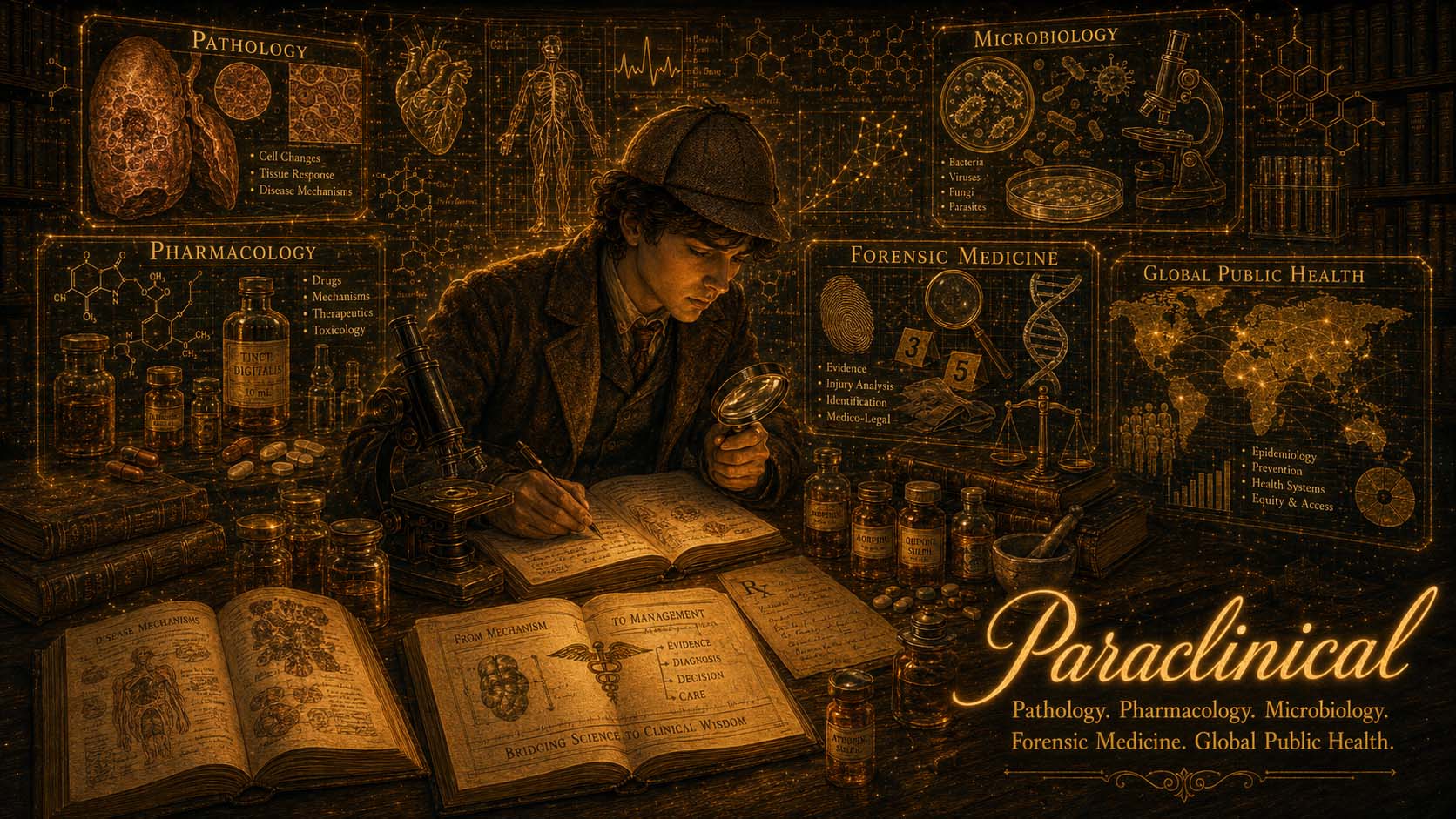
PARACLINICAL SCIENCES
Understanding the passage from health to disease.
The paraclinical sciences form the bridge between foundational biology and clinical medicine.
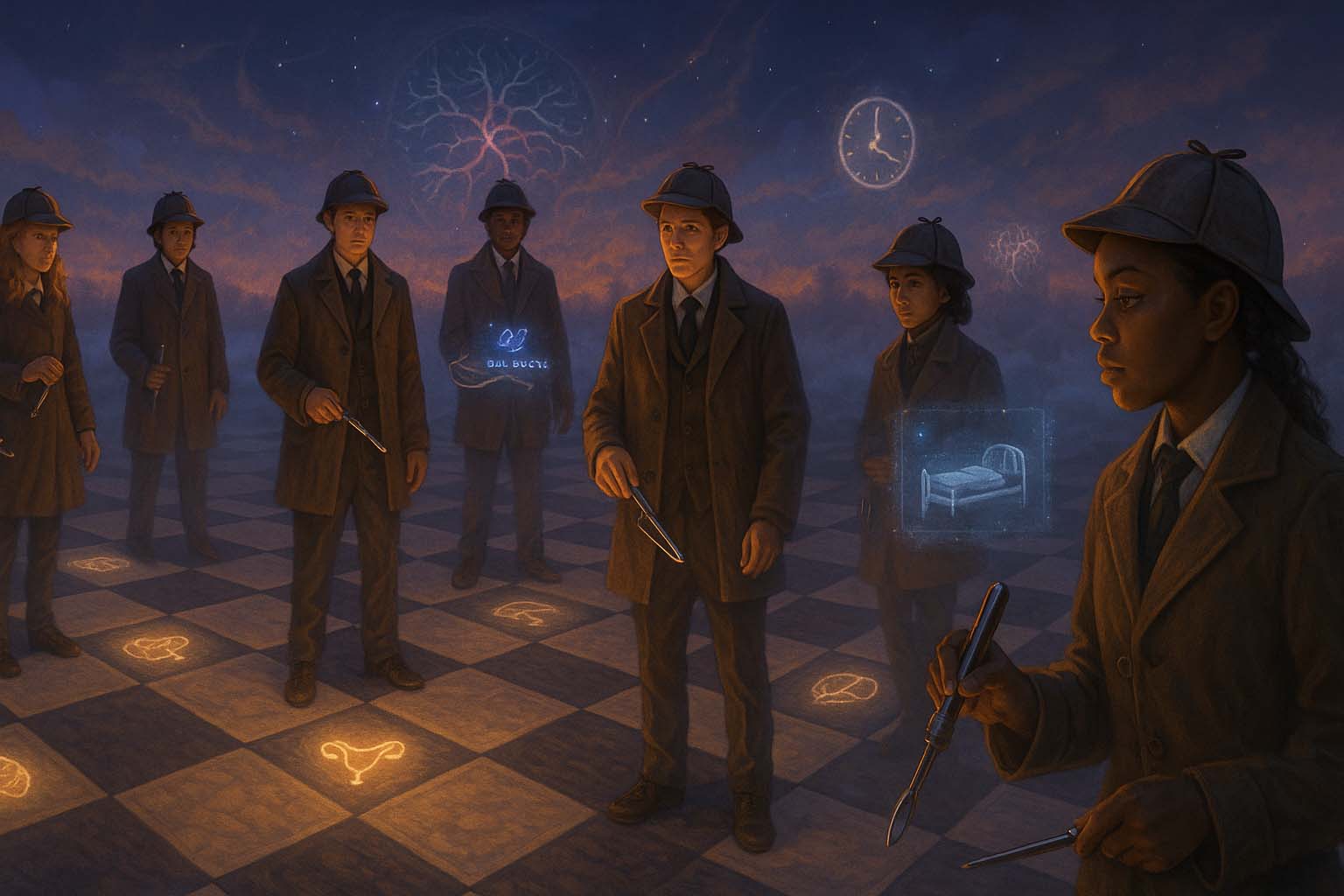
They explore what changes when normal systems fail, how disease emerges, how microorganisms interact with the body, how medicines modify biological processes and how illness is influenced by communities, environments and societies.
The principal disciplines include:
- Pathology
- Pharmacology
- Microbiology
- Global Public Health
- Forensic Medicine
Together, they answer some of medicine’s most important questions:
Why does disease develop?
How does it progress?
How can it be detected?
How can it be prevented?
How can biological processes be altered through treatment?
Enter Paraclinical Sciences →
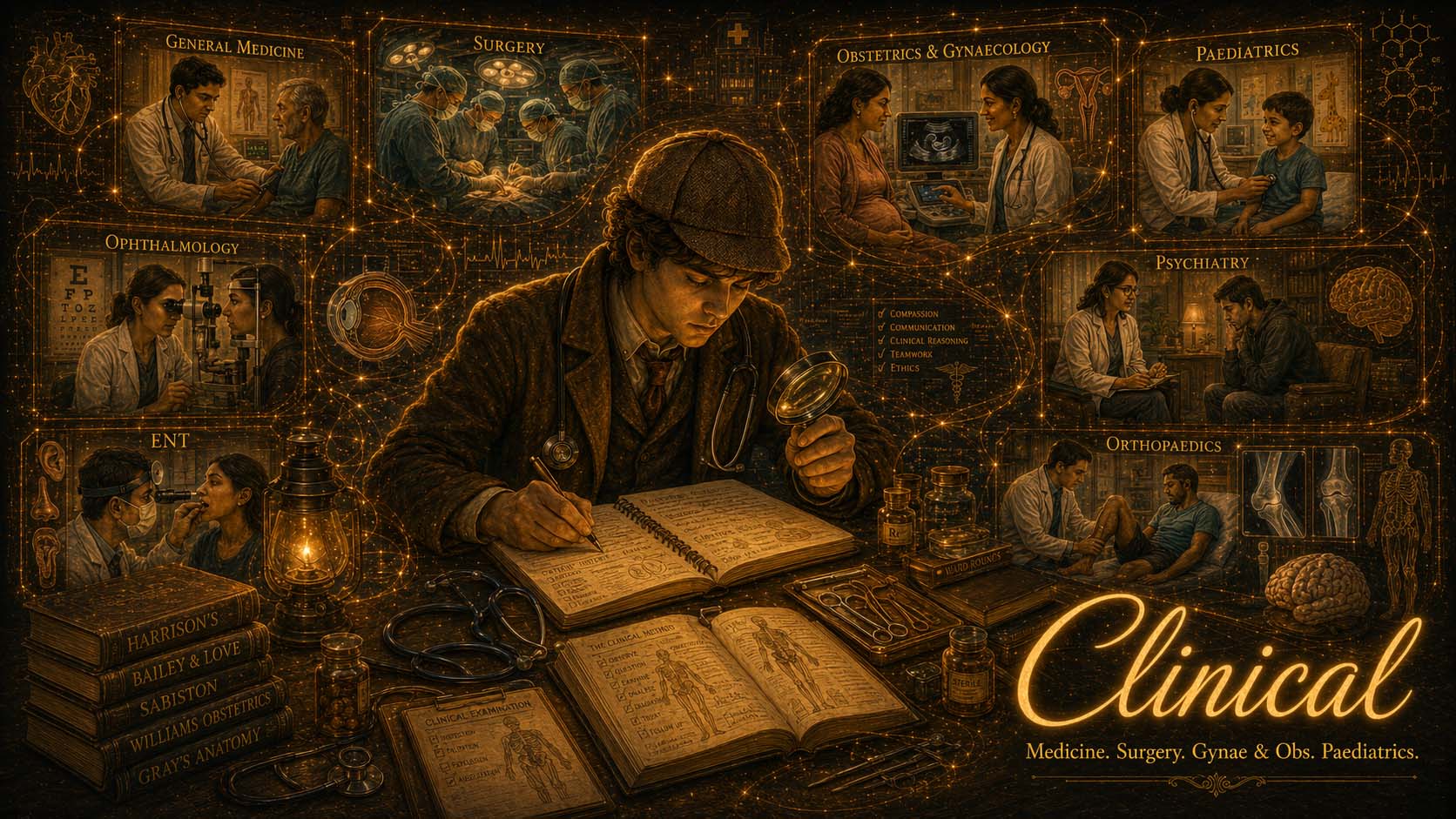
CLINICAL SCIENCES
Applying knowledge to human care.
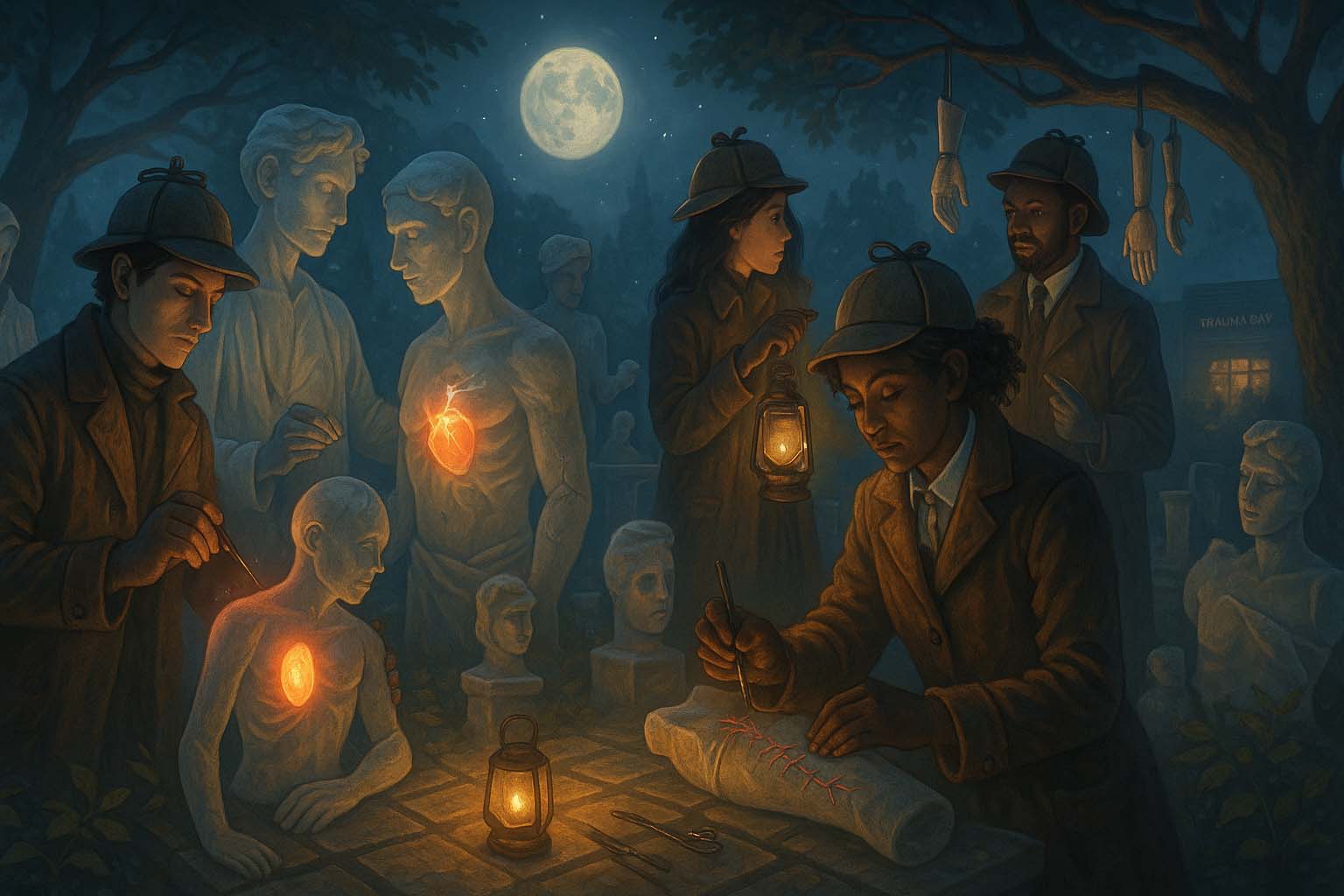
The clinical sciences bring scientific understanding into contact with the lived experience of illness.
Here, learners begin to explore how diseases present, how clinicians gather and interpret evidence, how treatment decisions are made and how different specialties approach the needs of patients.
The growing Clinical Sciences library includes:
- Medicine
- Surgery
- Psychiatry
It will progressively expand to include:
- Paediatrics
- Obstetrics and Gynaecology
- Orthopaedics
- Ophthalmology
- Otorhinolaryngology
- Anaesthesia
- Emergency Medicine
- Dermatology
- Palliative Care
- other major clinical disciplines
The clinical specialties introduce the breadth of medical practice. Deeper integration across anatomy, physiology, pathology, pharmacology and clinical medicine then takes place within Systems.
Enter Clinical Sciences →
The Medlock Learning Sequence
Every scientific topic is approached through three connected questions.
What is it?
The essential knowledge.
The terminology, structures, processes and principles that must first be recognised.
↓
How does it work?
The underlying mechanism.
The sequence of events, relationships and causal pathways that transform isolated information into understanding.
↓
Why does it matter?
The clinical significance.
The reason the concept matters when interpreting symptoms, recognising disease or caring for a patient.
This movement—from knowledge, to mechanism, to meaning—is at the heart of Medlock Holmes.
From Fragmented Facts to Mental Models
Medical education can sometimes feel like receiving thousands of pieces from hundreds of different puzzles.
Anatomy provides one set of pieces. Physiology provides another. Pathology, pharmacology and clinical medicine each add more.
The learner is frequently expected to assemble the picture alone.
The Clinical Deep Dives help reveal the picture on the box.
They identify the organising principles that allow individual facts to become part of a coherent mental model. Once that model has been built, new information has somewhere to belong.
Facts cease to float in isolation.
They begin to form patterns.
And patterns are the beginnings of clinical reasoning.
Created for Different Stages of the Journey
The Sciences library is designed to remain useful throughout a learner’s development.
For those beginning medicine
It provides an accessible entrance into unfamiliar subjects and offers a conceptual framework before the details become overwhelming.
For medical students
It supports lectures, examinations and textbook study by clarifying difficult mechanisms and connecting material taught across different modules.
For clinicians revisiting foundational knowledge
It offers a way to return to important scientific concepts without having to begin again from the first page of a major textbook.
For lifelong learners
It creates an expanding library through which medicine can be revisited, reconsidered and understood more deeply over time.
Medicine rarely needs to be learnt only once.
It needs to be returned to with new eyes.
Listen Wherever You Learn
The Clinical Deep Dives are designed for flexible learning.
Episodes can accompany a textbook chapter, prepare a learner for a lecture, consolidate a difficult topic or provide a thoughtful return to foundational science during a commute or quiet evening.
The collection is available through:
- Substack
- Spotify
- Apple Podcasts
- other major podcast platforms
Subject pages within Medlock Holmes connect directly to the relevant collections, allowing learners to move from discipline to discipline while maintaining a coherent educational journey.
Master the Disciplines. Prepare for Integration.
Sciences provides the foundations of medicine, but it is not the final destination.
Once the individual disciplines have been understood, they must be brought together.
A learner may first encounter cardiac anatomy in Preclinical Sciences, cardiovascular pathology in Paraclinical Sciences and heart disease in Clinical Sciences. Within Systems, those separate perspectives converge.
Structure meets function.
Function meets disease.
Disease meets diagnosis.
Diagnosis meets the person.
This is the journey from knowing medicine to thinking clinically.
The Medlock Holmes Journey
SPARK
Curiosity. Purpose. Calling.
Discover whether medicine speaks to something within you.
↓
SCIENCES
Knowledge. Logic. Foundations.
Build the disciplinary foundations upon which medicine depends.
↓
SYSTEMS
Connect. Integrate. Understand.
Bring the sciences together within the living systems of the human body.
↓
STORIES
Detect. Deduce. Diagnose.
Learn to recognise patterns, interpret evidence and reason through clinical uncertainty.
↓
STUDIO
Wonder. Create. Share.
Encounter medicine through conversations, visual explanations, music and creative learning.
↓
SPIRIT
See. Think. Care.
Explore the values, philosophy and humanity that give medicine its meaning.
Begin with the Foundations
Choose the school through which you would like to begin.
PRECLINICAL SCIENCES
Explore the healthy body through anatomy, physiology, biochemistry and embryology.
Explore Preclinical Sciences →
PARACLINICAL SCIENCES
Explore disease through pathology, microbiology, pharmacology, global public health and forensic medicine.
Explore Paraclinical Sciences →
CLINICAL SCIENCES
Explore how scientific knowledge becomes clinical assessment, diagnosis and care.
Explore Clinical Sciences →
The Medlock Holmes Promise
We do not simply help you cover the material.
We help you enter it.
To find the organising idea within a difficult chapter.
To see how one mechanism leads to another.
To turn information into understanding.
And to build foundations strong enough to support a lifetime of clinical learning.
Medlock Holmes Clinical Deep Dives
Take knowledge apart. Put understanding together.