Place two fingers gently against your wrist.
Can you feel it?
Now take a breath.
You did not have to tell your heart to beat. You did not have to remind your lungs to breathe. Yet, at this very moment, blood is travelling through your body, oxygen is reaching your cells and your brain is receiving everything it needs to remain conscious.
Inside you, an invisible orchestra is playing without pause.
But who is conducting it? How do its different parts stay in time? And what happens when the rhythm falters?
Enter the World
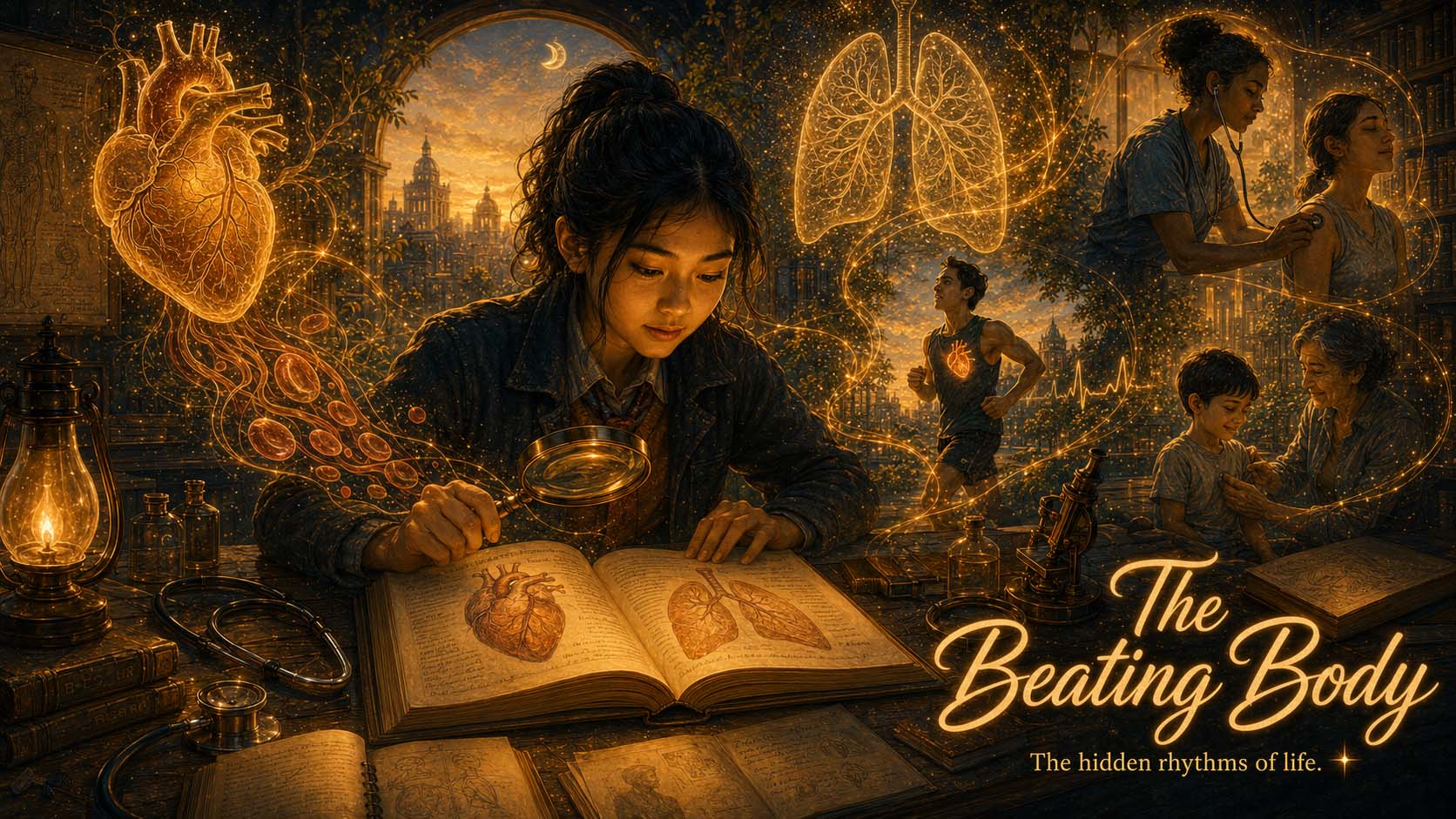
The Beating Body explores the systems that sustain life from one moment to the next.
You will begin with the heart’s mysterious rhythm, follow its echo into the pulse and discover how it changes when you run, rest, feel frightened or become unwell.
Then you will travel with a breath of oxygen—from the air, through the lungs, into the blood and onwards to the body’s most distant cells.
Finally, you will explore what happens when this living circuit struggles: when someone becomes breathless, when circulation begins to fail or when consciousness suddenly disappears in a faint.
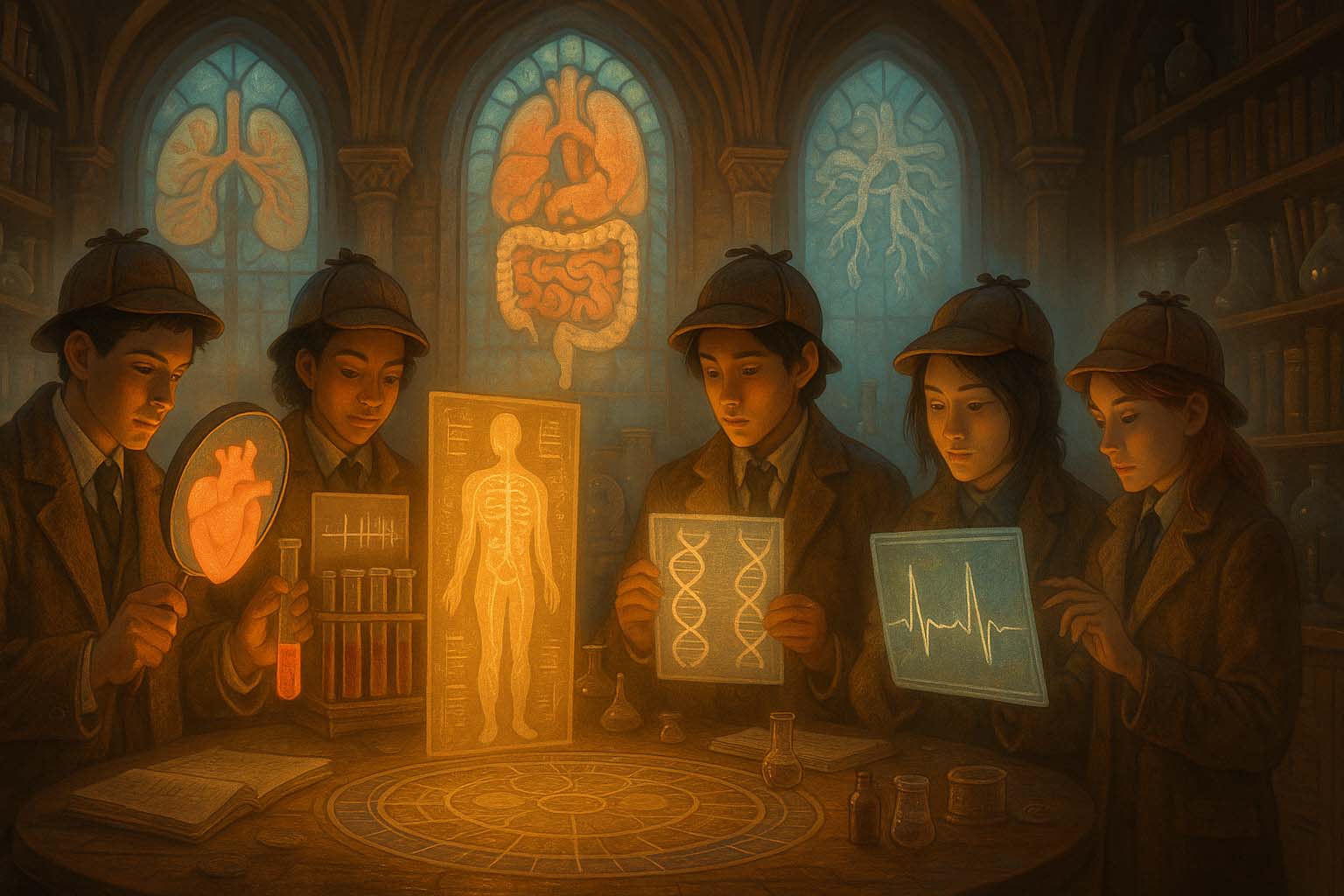
This is not simply a journey through separate organs.
It is the story of how the heart, lungs, blood and brain continually listen and respond to one another.
Three Paths Through the Beating Body
The Heart
The heart is more than a pump.
It is muscle, electricity, pressure and rhythm—working continuously through sleep, distraction and unconsciousness.
Where does each beat begin? How does it reach the wrist as a pulse? And how does the heart know when the body needs it to work harder?
Breath and Lungs
Breathing feels effortless—until it is not.
Why must we keep breathing? How does oxygen cross from the air into the body? And why can running, asthma, anaemia, heart disease and fear all leave someone feeling breathless?
One sensation can hide many different stories.
Blood and Circulation
Blood is not simply red liquid moving through pipes.
It carries oxygen, possesses its own biological identity and travels through a vast branching network to reach the brain, fingertips, kidneys and toes.
How can one heart supply an entire body? And what happens when the brain’s blood supply briefly falls?
Ten Questions to Follow
ELM-001
Why does the heart beat?
Where does the heart’s rhythm begin—and why does it continue without conscious instruction?
ELM-002
Why can we feel a pulse?
How does a heartbeat deep inside the chest create a wave that can be felt at the wrist?
ELM-003
How does the heart know when to beat faster or slower?
Why does the same heart race during exercise, fear, fever or illness—and slow again during rest?
ELM-004
Why do we breathe?
Is breathing only about taking in oxygen, or is something equally important being removed?
ELM-005
How does oxygen get from the air to every cell?
Follow one invisible gas through the lungs, into the blood and onwards to the tissues that need it.
ELM-006
Why do we become breathless?
How can running, asthma, anaemia, heart disease and panic produce a similar feeling?
ELM-007
Why is blood red?
What gives blood its colour—and is the blood inside our veins ever really blue?
ELM-008
Why do we have different blood groups?
Why can one person’s blood save a life, yet be dangerous to someone else?
ELM-009
How does blood reach every part of the body?
How does one pump deliver blood to billions of cells and then bring it back again?
ELM-010
Why do we faint?
Why can consciousness disappear when blood flow to the brain briefly falls—and why does lying down often help?
Nothing Works Alone
The heart cannot sustain life without the lungs.
The lungs cannot sustain life without blood.
Blood cannot reach the tissues without circulation.
The brain cannot remain conscious without a continuous supply of oxygen and energy.
The Beating Body reveals one of medicine’s first great lessons:
The body is not a collection of separate machines. It is a conversation between systems.
A racing heart may be an intelligent response to exercise—or a warning that something is wrong.
Breathlessness may begin in the lungs, heart, blood, muscles or brain.
A faint may be harmless in one person and an important warning sign in another.
Medicine begins not merely by noticing what has happened, but by asking:
What might this mean in this person, at this moment?
The Calling Question
You have followed the machinery that quietly keeps every human being alive.
What draws you closer?
Is it the elegance of the science?
The hidden electrical rhythm of the heart?
The journey of oxygen through the body?
The challenge of discovering why someone cannot breathe?
The mystery of why two people with the same symptom may need completely different help?
Or the possibility of being the person who stays calm, notices the clues and helps when someone is frightened?
Am I fascinated by the hidden rhythms that keep a person alive without conscious effort?
Pause for a moment.
Notice what sparked something in you.
Begin World One
Start with ELM-001: Why does the heart beat?
The first rhythm is already playing.
All you have to do is listen.