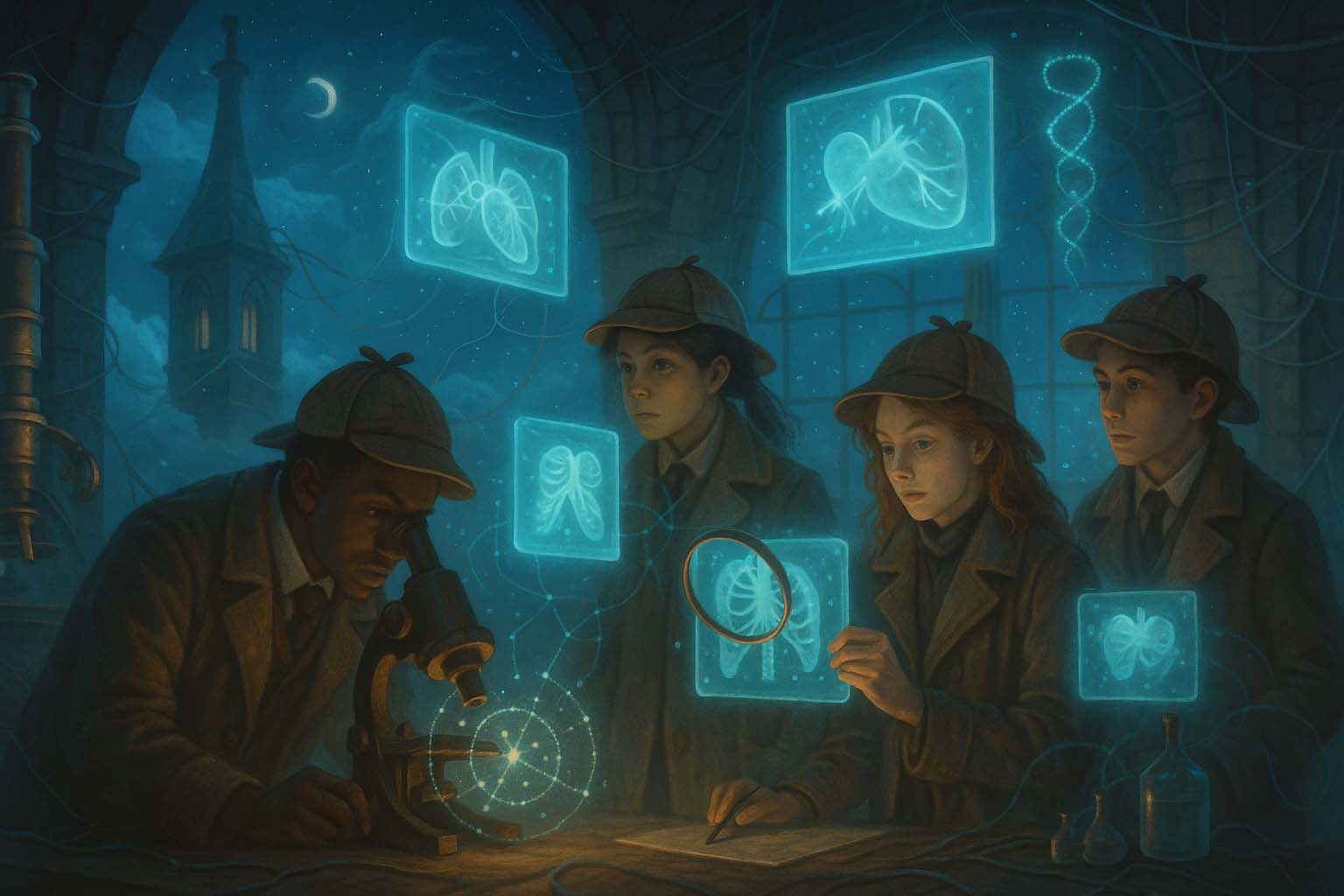
To understand illness, we must ask what changes when normal structure is damaged, when physiological balance is disturbed, when microorganisms invade, when medicines alter biological processes and when health is shaped by forces far beyond the individual patient.
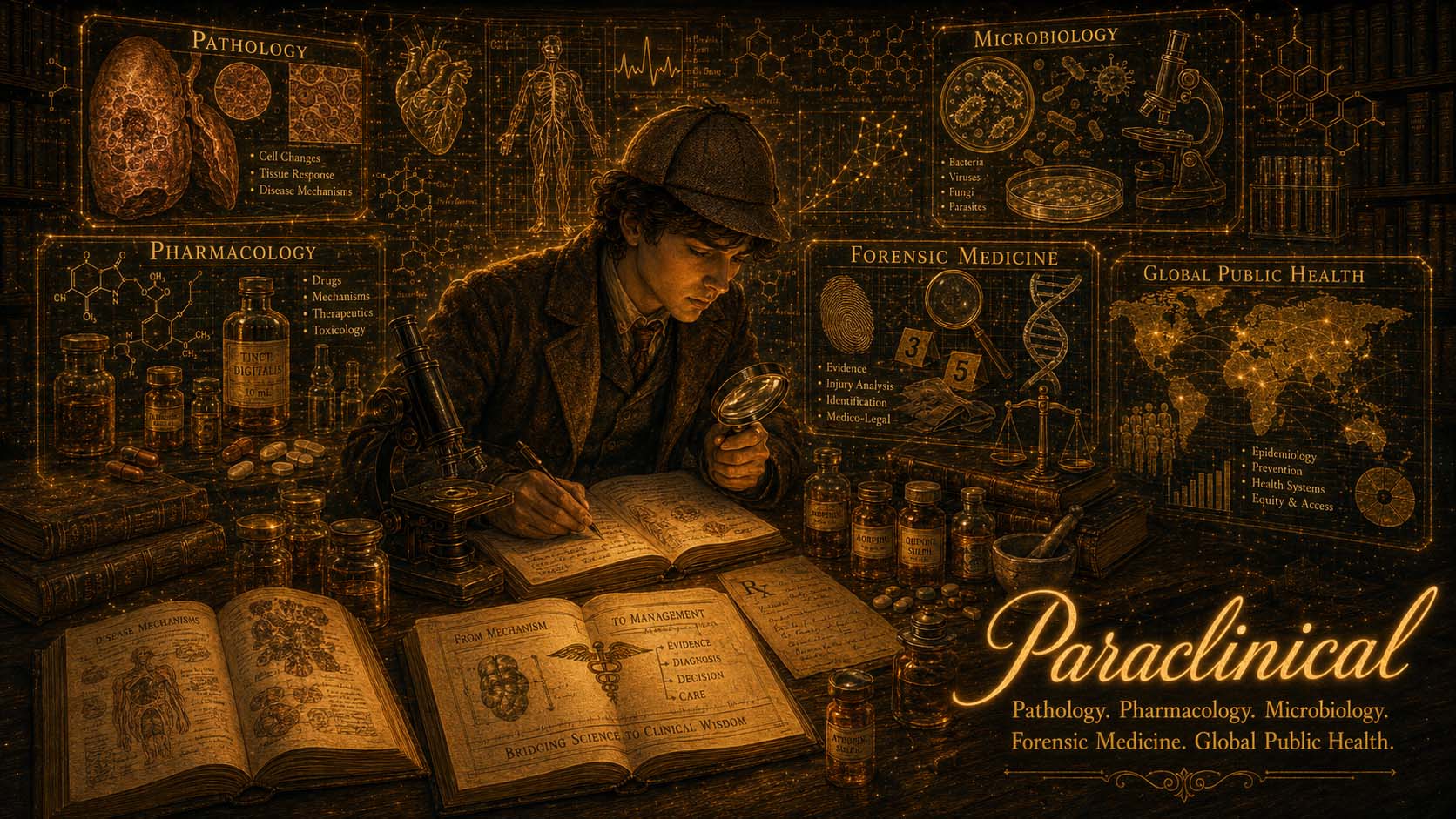
Paraclinical Sciences stands at the bridge between foundational science and clinical medicine.
It is where normal biology meets disease.
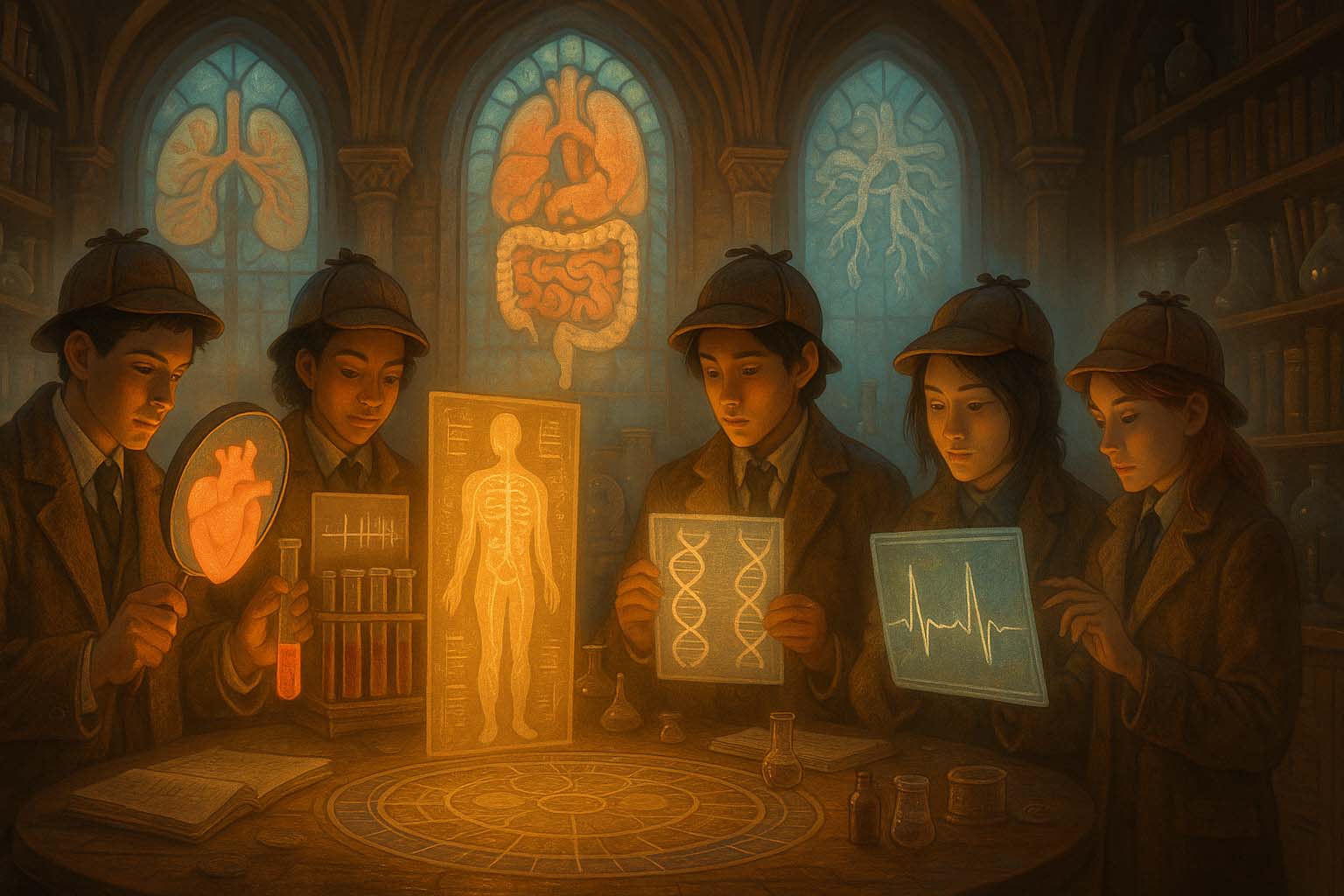
Through Clinical Deep Dives in Pathology, Pharmacology, Microbiology, Global Public Health and Forensic Medicine, learners explore how illness develops, how it spreads, how it is investigated, how it may be prevented and how medicine attempts to intervene.
The Bridge Between the Laboratory and the Bedside
The preclinical sciences help us understand how the body is built and how it functions.
The paraclinical sciences ask what happens when that order is disrupted.
Why does a cell become malignant?
How does inflammation protect the body and also cause harm?
How does a bacterium evade the immune system?
Why does one medicine help while another produces toxicity?
Why do patterns of disease differ between communities?
How can the body reveal the circumstances of injury, poisoning or death?
These questions move medicine from description towards explanation.
They provide the mechanisms beneath the diagnosis.
Without them, disease becomes a list of names.
With them, illness begins to make sense.
PATHOLOGY
Understanding what disease does to the body.
Pathology is the study of change.
It explores how cells, tissues and organs respond to injury, infection, inflammation, abnormal growth and degeneration.
It is the discipline that asks:
What has gone wrong?
What caused the change?
How does the damage progress?
What patterns does disease leave behind?
Pathology connects symptoms and signs to the biological processes beneath them.
A fever may reflect inflammation.
Jaundice may reveal disrupted bilirubin metabolism.
Weakness may arise from muscle disease, nerve injury or altered neuromuscular transmission.
A mass may represent inflammation, benign growth or malignancy.
The Pathology Clinical Deep Dives help learners move beyond lists of diseases towards the recurring mechanisms that appear throughout medicine.
Topics may include:
- cellular injury and adaptation
- inflammation and repair
- immune-mediated disease
- haemodynamic disorders
- thrombosis and embolism
- neoplasia
- genetic and developmental disease
- infectious pathology
- haematological disease
- organ-specific pathology
- histopathological patterns
- clinicopathological correlation
Pathology teaches us that disease is not random chaos.
It has patterns.
And patterns are the language through which the body reveals what has happened.
Explore Pathology Clinical Deep Dives →
PHARMACOLOGY
Understanding how medicines change biology.
Pharmacology explores the relationship between a substance and the living body.
It asks how medicines reach their targets, how they alter cellular processes, how the body transforms and removes them and why the same drug may help one person while harming another.
At first, pharmacology can feel like an enormous catalogue of names, receptors, adverse effects and interactions.
But beneath that catalogue lie a series of recurring principles.
What target does the medicine act upon?
Does it activate, block or modify that target?
How does concentration influence effect?
How is the medicine absorbed, distributed, metabolised and excreted?
What determines therapeutic benefit?
What creates toxicity?
How do age, genetics, organ function and other medicines alter the response?
The Pharmacology Clinical Deep Dives are designed to reveal these underlying principles before layering in individual drug classes.
Topics may include:
- pharmacodynamics
- pharmacokinetics
- receptors and signalling
- agonists and antagonists
- dose–response relationships
- drug metabolism
- therapeutic index
- adverse drug reactions
- drug interactions
- antimicrobial therapy
- cardiovascular pharmacology
- neuropharmacology
- endocrine pharmacology
- chemotherapy
- rational prescribing
Pharmacology is not simply the study of medicines.
It is the study of controlled biological change.
Explore Pharmacology Clinical Deep Dives →
MICROBIOLOGY
Understanding the organisms that live with us, within us and against us.
Human life exists within a microbial world.
Some microorganisms support health.
Some coexist without causing harm.
Others invade tissues, evade defences, release toxins and spread between people, animals and environments.
Microbiology explores this relationship between the human host and the organisms capable of producing disease.
It asks:
What is the organism?
How is it transmitted?
How does it enter and survive within the host?
What damage does it cause?
How does the immune system respond?
How can infection be identified, prevented and treated?
The Microbiology Clinical Deep Dives bring together organisms, mechanisms and clinical patterns.
Rather than reducing microbiology to endless taxonomic lists, the aim is to organise knowledge around meaningful biological and clinical questions.
Topics may include:
- bacteriology
- virology
- mycology
- parasitology
- host–pathogen interactions
- microbial virulence
- antimicrobial resistance
- infection prevention
- diagnostic microbiology
- vaccination
- emerging infections
- zoonotic disease
- healthcare-associated infection
- global patterns of infectious disease
Microbiology reveals that infection is not simply the presence of an organism.
It is an encounter between organism, host and environment.
Explore Microbiology Clinical Deep Dives →
GLOBAL PUBLIC HEALTH
Understanding health beyond the individual patient.
Clinical medicine often begins with one person in one room.
Public health asks us to widen the lens.
Why are some communities healthier than others?
Why do certain diseases cluster around poverty, displacement, pollution, occupation or unequal access to care?
Why can a highly effective treatment still fail to improve population health?
How should societies decide where limited resources should be used?
Global Public Health explores the forces that shape health across communities, nations and the world.
It brings together epidemiology, prevention, policy, ethics, social determinants, environmental health and health systems.
The Global Public Health Clinical Deep Dives help learners understand how patterns of illness emerge and how collective action can prevent suffering before it reaches the clinic.
Topics may include:
- epidemiology
- disease prevention
- screening
- vaccination programmes
- health promotion
- social determinants of health
- health inequality
- maternal and child health
- occupational health
- environmental health
- migration and displacement
- global disease burden
- health systems
- health policy
- medical ethics
- evidence-based medicine
Public health reminds us that disease is never only biological.
It is also social, environmental, political and economic.
Explore Global Public Health Clinical Deep Dives →
FORENSIC MEDICINE
Understanding when medicine meets law, evidence and society.
Forensic Medicine stands at the meeting point of medicine, law and public responsibility.
It applies medical knowledge to questions of injury, death, identification, consent, capacity, violence, poisoning and the interpretation of evidence.
The discipline demands both scientific precision and ethical care.
What caused an injury?
When might it have occurred?
Could the pattern be accidental, self-inflicted or caused by another person?
What can toxicology reveal?
How should medical evidence be documented?
What duties does a clinician hold towards the patient, the court and society?
The Forensic Medicine Clinical Deep Dives explore the principles that allow medical findings to be interpreted within legal and ethical contexts.
Topics may include:
- medicolegal documentation
- death and post-mortem change
- trauma and wound interpretation
- toxicology
- sexual offences medicine
- child and elder abuse
- identification
- consent and capacity
- professional responsibility
- confidentiality and disclosure
- medical negligence
- court reports and expert evidence
- ethics at the boundary of medicine and law
Forensic Medicine teaches that evidence must be handled carefully.
A body, a wound, a sample or a clinical record may become part of a story whose consequences extend far beyond the consulting room.
Explore Forensic Medicine Clinical Deep Dives →
Five Lenses on Disease
The paraclinical disciplines examine illness from different perspectives.
Consider a patient with severe bacterial pneumonia.
Pathology explains the inflammation, tissue injury and impaired gas exchange.
Microbiology identifies the organism, its virulence and its route of transmission.
Pharmacology guides the choice, action and safe use of antimicrobial treatment.
Global Public Health examines vaccination, population risk, access to care and patterns of transmission.
Forensic Medicine may become relevant when questions arise about occupational exposure, neglect, delayed treatment or the circumstances surrounding death.
Each discipline illuminates a different part of the same event.
Together, they turn disease from a label into a layered explanation.
Clinical Deep Dives
Conceptual companions for complex medical science.
The Paraclinical Clinical Deep Dives are designed to help learners navigate subjects that are dense with terminology, mechanisms, classifications and exceptions.
They draw upon major source texts and bring together concepts that may otherwise remain scattered across chapters, disciplines and clinical examples.
Each Deep Dive seeks to reveal the organising logic beneath the detail.
You may encounter:
- disease mechanisms explained step by step
- links between cause, pathology and clinical presentation
- drug actions organised around receptors and physiological systems
- microbial behaviour connected to clinical syndromes
- memorable metaphors for difficult mechanisms
- comparisons between commonly confused conditions
- frameworks for understanding epidemiology and population health
- ethical and legal dilemmas examined through clinical reasoning
- memory aids for high-density material
- bridges between laboratory science and bedside practice
The aim is not to remove complexity.
It is to give complexity a shape.
From Disease Names to Disease Models
A diagnosis is a useful label.
But a label is not the same as understanding.
To truly understand a disease, the learner must be able to trace a chain:
What began the process?
What changed within the body?
How did the body respond?
What symptoms and signs emerged?
What investigations would reveal the change?
Where might treatment interrupt the process?
What might happen if the disease continues?
The paraclinical sciences provide this chain.
They transform disease from a fact to be remembered into a process that can be followed.
Once the process is understood, clinical medicine becomes less like memorising thousands of separate conditions and more like recognising recurring patterns.
Designed for Flexible Learning
The Paraclinical Sciences library can support learners at different points in their journey.
Before formal teaching
Gain a conceptual overview of the subject before entering dense detail.
Alongside a textbook
Use the Deep Dive to identify the central mechanisms and organise difficult chapters.
During revision
Return to the underlying disease model before revisiting classifications, lists and examination details.
Before clinical placements
Reconnect pathology, microbiology and pharmacology with the patients and presentations likely to be encountered.
During clinical practice
Revisit the mechanisms beneath a diagnosis, investigation or treatment decision.
The deeper the clinical experience, the more meaningful these foundations often become.
A mechanism first learnt in the abstract may later be recognised in a patient.
A Growing Library
Paraclinical Sciences is a developing collection.
The current library brings together substantial sequences in:
- Pathology
- Pharmacology
- Microbiology
- Global Public Health
- Forensic Medicine
Over time, the collection may expand through more detailed conceptual guides in:
- immunology
- virology
- parasitology
- mycology
- toxicology
- epidemiology
- antimicrobial resistance
- medical ethics
- evidence-based medicine
- health systems
- environmental health
- molecular pathology
- other emerging and foundational fields
Each new sequence will preserve the same educational purpose:
To uncover mechanisms.
To organise complexity.
To connect science with clinical meaning.
Listen Wherever You Learn
The Paraclinical Sciences Clinical Deep Dives are available through:
- Substack
- Spotify
- Apple Podcasts
- other major podcast platforms
Use the subject collections below to enter the library.
Choose Your Subject
PATHOLOGY
Explore how cells, tissues and organs change in disease.
Enter Pathology →
PHARMACOLOGY
Explore how medicines interact with biological systems.
Enter Pharmacology →
MICROBIOLOGY
Explore the organisms, mechanisms and patterns of infectious disease.
Enter Microbiology →
GLOBAL PUBLIC HEALTH
Explore the forces that shape health across populations and societies.
Enter Global Public Health →
FORENSIC MEDICINE
Explore the meeting point of medicine, law, evidence and ethics.
Enter Forensic Medicine →
From Mechanism to Patient Care
Paraclinical Sciences asks:
What has gone wrong?
Why did it happen?
How does it progress?
How might it be prevented or altered?
The next school asks how this knowledge is applied when a real person seeks help.
In Clinical Sciences, mechanisms become presentations.
Pathology becomes diagnosis.
Pharmacology becomes treatment.
Microbiology becomes infection management.
Population knowledge becomes prevention.
The bridge now reaches the bedside.
Continue to Clinical Sciences →
Understand the Process Beneath the Presentation
A patient rarely arrives carrying the name of their disease.
They arrive with pain, fever, weakness, bleeding, confusion or breathlessness.
The clinician must work backwards.
From presentation to mechanism.
From mechanism to cause.
From cause to diagnosis.
From diagnosis to action.
The paraclinical sciences make that journey possible.
They teach us to look beneath the surface of illness and follow the process unfolding within.
Medlock Holmes Paraclinical Sciences
Trace the cause. Understand the change. Find the point of intervention.