
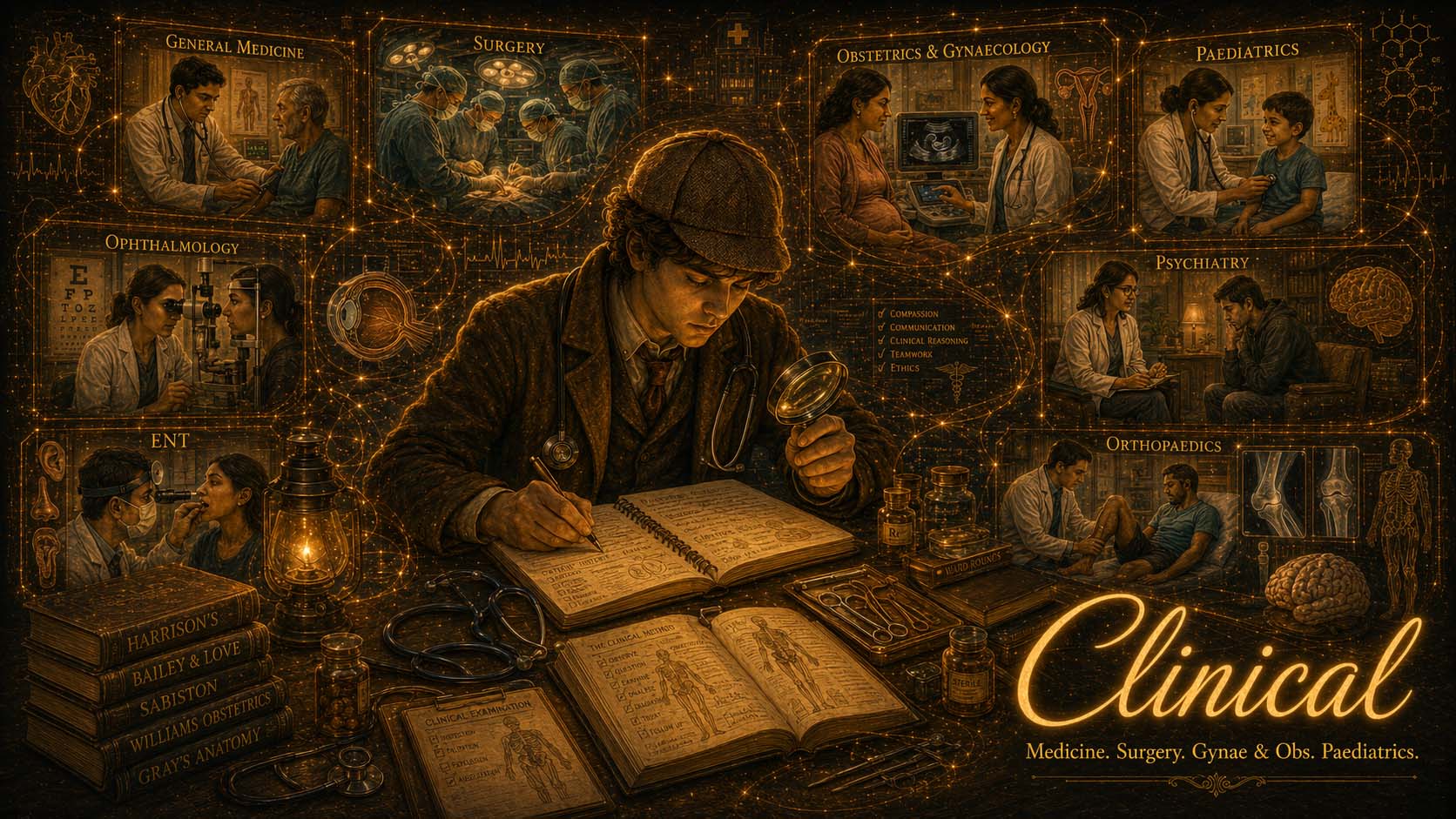
SCIENCES: CLINICAL
Presentation. Reasoning. Care.
Clinical medicine begins where scientific knowledge meets a human life.
A patient rarely arrives with a diagnosis already attached.
They come with pain, breathlessness, weakness, bleeding, confusion, fear or a change they cannot explain.
The clinician must listen to the story, examine the person, recognise patterns, interpret evidence and decide what should happen next.
Clinical Sciences explores how the foundations of medicine are applied at the bedside.
Through a growing library of Clinical Deep Dives, learners enter the major disciplines of medical practice and discover how scientific knowledge becomes clinical reasoning, diagnosis, treatment and care.
Where Knowledge Meets the Patient
The preclinical sciences explain how the healthy body is built and how it works.
The paraclinical sciences reveal how disease begins, progresses and may be altered.
The clinical sciences bring those foundations together in the presence of a patient.
Here, anatomy becomes localisation.
Physiology becomes interpretation.
Pathology becomes diagnosis.
Pharmacology becomes prescribing.
Microbiology becomes infection management.
Public health becomes prevention.
Psychology becomes communication, meaning and care.
Clinical science is therefore not simply another body of information.
It is the art of bringing different forms of knowledge together at the right moment, for the right person.
From Disease to Lived Experience
Textbooks often organise medicine around diseases.
Patients experience illness in a different way.
They experience symptoms.
They experience uncertainty.
They experience disruption to work, relationships, identity and hope.
Clinical learning must therefore hold two perspectives at once:
What disease process may be occurring?
and
What is happening to this person?
The Clinical Deep Dives explore both.
They examine the scientific architecture of disease while continually returning to presentation, reasoning, management and the lived experience of illness.
The purpose is not only to know what a condition is.
It is to understand how it appears, how it is distinguished from alternatives and how knowledge should guide action.
MEDICINE
Following the clues within the body.
Medicine encompasses a vast range of conditions affecting the organs and systems that sustain human life.
It asks the clinician to recognise patterns across symptoms, signs, investigations and time.
Why is this patient breathless?
What explains the fever?
Is the weakness arising from the brain, spinal cord, peripheral nerves, muscles or metabolism?
Does the abnormal blood result represent a diagnosis, a complication or an incidental finding?
The Medicine Clinical Deep Dives help learners move beyond lists of diseases towards structured clinical understanding.
Topics may include:
- cardiovascular medicine
- respiratory medicine
- gastroenterology
- neurology
- endocrinology
- nephrology
- rheumatology
- haematology
- infectious diseases
- oncology
- geriatric medicine
- acute medicine
- clinical immunology
- multisystem disease
- diagnostic reasoning
Individual conditions are explored within a wider conceptual framework:
What is the underlying mechanism?
How does it produce the presentation?
Which features support the diagnosis?
Which findings point elsewhere?
What investigations clarify the picture?
What principles guide management?
Medicine teaches us to recognise the story a disease tells through the body.
Explore Medicine Clinical Deep Dives →
SURGERY
Understanding when anatomy demands action.
Surgery is where knowledge of structure, pathology and physiology meets the possibility of physical intervention.
It requires the clinician to identify when disease can be observed, treated medically, repaired, removed, drained, reconstructed or prevented from causing further harm.
Surgical reasoning begins long before an operation.
Is this pain arising from inflammation, obstruction, perforation, ischaemia or bleeding?
Does the patient require immediate intervention?
Can treatment safely wait?
What are the risks of operating?
What are the risks of not operating?
The Surgery Clinical Deep Dives explore the principles beneath surgical disease and decision-making.
Topics may include:
- principles of surgical assessment
- acute abdominal presentations
- gastrointestinal surgery
- hepatobiliary and pancreatic surgery
- breast surgery
- endocrine surgery
- vascular surgery
- trauma
- surgical oncology
- wound healing
- infection and sepsis
- fluid and electrolyte management
- perioperative care
- postoperative complications
- surgical ethics and consent
The aim is not merely to describe procedures.
It is to understand the clinical problem that made intervention necessary.
Surgery reveals anatomy under pressure.
Explore Surgery Clinical Deep Dives →
PSYCHIATRY
Understanding the mind within the life of the person.
Psychiatry explores disturbances of thought, mood, perception, behaviour, memory, identity and relationships.
It asks questions that are both scientific and profoundly human.
Why has this person become depressed?
What does a voice mean to the person hearing it?
How do biology, trauma, personality, relationships and social conditions interact?
When does understandable distress become a mental disorder?
How can risk be understood without reducing someone to a prediction?
What supports recovery when cure is not immediate or complete?
The Psychiatry Clinical Deep Dives draw together neuroscience, psychology, phenomenology, social context and clinical practice.
Topics may include:
- psychiatric assessment
- descriptive psychopathology
- mood disorders
- psychotic disorders
- anxiety and trauma-related disorders
- substance use
- personality and relational patterns
- neuropsychiatry
- cognitive disorders
- child and adolescent psychiatry
- old age psychiatry
- psychological therapies
- psychopharmacology
- suicide prevention
- risk formulation
- recovery-oriented practice
- ethics, capacity and mental health law
Psychiatry reminds us that diagnosis must never eclipse personhood.
The mind cannot be understood apart from the life in which it has developed.
Explore Psychiatry Clinical Deep Dives →
OBSTETRICS AND GYNAECOLOGY (Coming Soon)
Understanding reproduction, birth and women’s health.
Obstetrics and Gynaecology spans development, fertility, pregnancy, birth, reproductive health and disease across the lifespan.
It brings together physiology, endocrinology, anatomy, surgery, medicine and deeply personal dimensions of care.
Clinical questions may include:
How should pregnancy be monitored?
What distinguishes normal discomfort from urgent danger?
Why does labour begin?
What causes abnormal bleeding?
How should infertility, pelvic pain or reproductive loss be investigated?
How can clinicians support informed and sensitive choices?
Future Clinical Deep Dives will explore:
- reproductive physiology
- pregnancy and antenatal care
- labour and delivery
- maternal medicine
- obstetric emergencies
- fetal development and monitoring
- menstrual disorders
- fertility and infertility
- contraception
- menopause
- benign gynaecological disease
- gynaecological oncology
- reproductive ethics
This discipline reminds us that medicine often accompanies people at moments of profound hope, uncertainty, transition and loss.
Explore Obstetrics and Gynaecology →
PAEDIATRICS (Coming Soon)
Understanding the patient who is still becoming.
Children are not simply smaller adults.
Their anatomy, physiology, communication, development and patterns of disease change continuously as they grow.
Paediatrics asks the clinician to understand both the illness and the developmental stage in which it occurs.
Is this behaviour normal for the child’s age?
Is growth following the expected trajectory?
How does disease present differently in infancy?
How should the child’s voice, the family’s concerns and safeguarding responsibilities be balanced?
Future Clinical Deep Dives may include:
- neonatal medicine
- growth and development
- childhood infections
- respiratory and gastrointestinal disease
- congenital disorders
- paediatric neurology
- paediatric emergencies
- adolescent health
- developmental and behavioural paediatrics
- safeguarding
- chronic childhood illness
- family-centred care
Paediatrics is medicine practised in motion.
The patient is not only recovering.
They are growing.
Explore Paediatrics →
ORTHOPAEDICS (Coming Soon)
Understanding movement, structure and repair.
Orthopaedics explores the bones, joints, muscles, ligaments and tissues that allow the body to move through the world.
It combines anatomy, biomechanics, imaging, trauma and rehabilitation.
Clinical questions may include:
Is this injury stable?
Which structure has been damaged?
Why is movement restricted?
Does pain arise from bone, joint, muscle, tendon, nerve or referred pathology?
What can heal naturally, and what requires intervention?
Future Clinical Deep Dives may include:
- fracture principles
- joint injuries
- musculoskeletal examination
- bone and joint infection
- degenerative disease
- spinal disorders
- sports injuries
- paediatric orthopaedics
- bone tumours
- trauma management
- rehabilitation
- imaging and anatomical localisation
Orthopaedics reveals that movement is not merely mechanical.
It is central to independence, identity and participation in life.
Explore Orthopaedics →
OPHTHALMOLOGY (Coming Soon)
Understanding vision and the pathways of sight.
The eye offers a remarkable window into both local and systemic disease.
A change in vision may arise from the cornea, lens, retina, optic nerve, brain or circulation.
Ophthalmology demands precise anatomy, careful examination and urgent recognition of conditions in which delay may lead to permanent loss.
Future Clinical Deep Dives may include:
- visual pathways
- refractive error
- red eye
- cataract
- glaucoma
- retinal disease
- ocular emergencies
- neuro-ophthalmology
- eye movements
- systemic disease affecting the eye
- visual field abnormalities
Ophthalmology teaches us that a small structure may contain an entire world of diagnostic clues.
Explore Ophthalmology →
OTORHINOLARYNGOLOGY (Coming Soon)
Understanding hearing, balance, voice and the upper airway.
Otorhinolaryngology, commonly known as ENT, explores the interconnected systems of the ear, nose, throat, head and neck.
These regions support hearing, balance, breathing, swallowing, speech, smell and communication.
Future Clinical Deep Dives may include:
- hearing loss
- vestibular disorders
- ear infections
- nasal obstruction
- sinus disease
- voice disorders
- swallowing difficulty
- upper airway emergencies
- neck lumps
- head and neck cancer
- cranial nerve relationships
- paediatric ENT
ENT demonstrates how anatomy, sensation and communication converge within a remarkably compact region of the body.
Explore Otorhinolaryngology →
Other Clinical Disciplines
The Clinical Sciences library will continue to expand.
Future collections may include:
- Dermatology
- Palliative Care
- General Practice
- Rehabilitation Medicine
- Pain Medicine
- Intensive Care Medicine
- Sexual Health
- Clinical Genetics
- Community Medicine
- other major fields of clinical practice
Each discipline offers a different doorway into the same central task:
Understanding illness well enough to help another human being.
The Clinical Deep Dives
Conceptual companions for the clinical journey.
Clinical textbooks are rich with knowledge, but they are often enormous.
A learner may encounter hundreds of diseases, long differential diagnoses, complex management pathways and large quantities of detail distributed across multiple chapters and texts.
The Clinical Deep Dives are designed to reveal the organising structure beneath that complexity.
They draw upon substantial source material and bring together key ideas into coherent conceptual journeys.
A Deep Dive may explore:
- the central mechanisms of a disease
- the logic behind a clinical presentation
- the relationship between symptoms, signs and investigations
- distinctions between commonly confused diagnoses
- diagnostic frameworks
- treatment principles
- complications and red flags
- patterns that recur across specialties
- memorable metaphors and memory aids
- uncertainty and clinical judgement
- the patient’s experience of illness
The aim is not to offer a compressed list of facts.
It is to help the learner build a clinical model.
From Textbook Knowledge to Clinical Reasoning
Knowing a disease is not the same as recognising it.
Recognising it is not the same as distinguishing it from alternatives.
And naming it is not the same as knowing what to do next.
Clinical reasoning requires movement through a sequence.
What is happening?
Identify the presenting problem.
↓
Where is it happening?
Localise the likely organ, system or process.
↓
Why might it be happening?
Generate plausible mechanisms and diagnoses.
↓
What evidence supports or challenges each possibility?
Interpret the history, examination and investigations.
↓
What must happen next?
Decide what is urgent, useful, safe and proportionate.
The Clinical Deep Dives help learners practise this movement from presentation to action.
The Patient Is Not a Multiple-Choice Question
Real patients rarely present in neat categories.
Symptoms overlap.
Investigations may be equivocal.
Several illnesses may coexist.
Social circumstances may alter what is possible.
The patient may not describe their experience in textbook language.
Clinical care therefore requires more than recall.
It requires judgement.
It requires the ability to tolerate uncertainty without becoming paralysed by it.
It requires recognising when more information is needed and when action cannot wait.
It also requires humility: the willingness to revise a diagnosis when the evidence changes.
Clinical science is not certainty applied to people.
It is disciplined reasoning in the presence of uncertainty.
Four Questions at the Bedside
Across every clinical discipline, the Medlock Holmes approach returns to four questions.
What do I notice?
The symptoms, signs, context and clues.
What might explain it?
The possible mechanisms and diagnoses.
What does not fit?
The contradictions, absences and alternative explanations.
What should happen next?
The investigation, treatment, conversation or act of care that matters now.
These questions transform clinical learning from passive recognition into active reasoning.
Learning Across Specialties
Clinical disciplines are useful ways of organising knowledge.
Patients, however, frequently cross those boundaries.
A person with abdominal pain may require medicine, surgery, gynaecology, psychiatry or several disciplines at once.
A patient with dizziness may have a neurological, cardiovascular, vestibular, metabolic or medication-related cause.
A person with unexplained weight loss may require consideration of malignancy, infection, endocrine disease, gastrointestinal illness or depression.
The Clinical Sciences library therefore teaches specialties without pretending they exist in isolation.
Each subject offers a distinct perspective.
The clinician’s task is to know when those perspectives must be brought together.
Clinical Sciences and Systems
Within Clinical Sciences, learners explore medicine through its major professional disciplines.
Within Systems, those disciplines are integrated around the organs and networks of the body.
For example, cardiovascular knowledge may appear in:
- Anatomy
- Physiology
- Pathology
- Pharmacology
- Medicine
- Surgery
- Emergency Medicine
- Psychiatry
- Public Health
Within Systems → Cardiovascular, these perspectives converge.
The subject page provides the discipline.
The system page provides the integration.
This creates a coherent journey from foundational knowledge to whole-system understanding.
Designed for Flexible Learning
The Clinical Sciences library can support learners in several ways.
Before clinical placements
Develop a conceptual map of the specialty before entering the ward, clinic or theatre.
Alongside textbooks and lectures
Use the Deep Dives to organise large volumes of material around the central clinical questions.
During revision
Return to the disease model, diagnostic pattern and management principles before revisiting finer detail.
Before examinations
Strengthen understanding of mechanisms, presentations and distinctions between similar conditions.
During clinical practice
Revisit a subject after encountering a patient whose presentation has made the knowledge newly meaningful.
Clinical learning often deepens after the bedside encounter.
A chapter read before meeting a patient provides information.
The same chapter read afterwards may provide understanding.
A Growing Clinical Library
The present Clinical Sciences collection includes extensive and developing sequences in:
- Medicine
- Surgery
- Psychiatry
The library will progressively expand through:
- Obstetrics and Gynaecology
- Paediatrics
- Orthopaedics
- Ophthalmology
- Otorhinolaryngology
- Anaesthesia
- Emergency Medicine
- Dermatology
- Palliative Care
- other clinical disciplines
The library is intended to grow over time rather than appear complete from the outset.
Each new Clinical Deep Dive will add another room to the house of clinical understanding.
The architecture will remain consistent:
Mechanism.
Presentation.
Reasoning.
Care.
Listen Wherever You Learn
The Clinical Sciences Clinical Deep Dives are available through:
- Substack
- Spotify
- Apple Podcasts
- other major podcast platforms
Use the collections below to enter the growing library.
Choose Your Clinical Discipline
MEDICINE
Explore disease mechanisms, clinical presentations and diagnostic reasoning across the major medical specialties.
Enter Medicine →
SURGERY
Explore surgical disease, decision-making, intervention and perioperative care.
Enter Surgery →
PSYCHIATRY
Explore the mind, behaviour, relationships and the human experience of mental illness.
Enter Psychiatry →
OBSTETRICS AND GYNAECOLOGY
Explore pregnancy, birth, reproductive health and disorders across the lifespan.
Enter Obstetrics and Gynaecology →
PAEDIATRICS
Explore growth, development and illness in infants, children and adolescents.
Enter Paediatrics →
ORTHOPAEDICS
Explore movement, injury and disorders of bones, joints and supporting tissues.
Enter Orthopaedics →
OPHTHALMOLOGY
Explore vision, ocular disease and the pathways of sight.
Enter Ophthalmology →
OTORHINOLARYNGOLOGY
Explore hearing, balance, voice, swallowing and the upper airway.
Enter ENT →
From Clinical Knowledge to Integrated Understanding
Clinical Sciences asks:
How does disease present?
How should the evidence be interpreted?
What diagnosis best explains the pattern?
What should be done next?
The journey then continues into Systems, where anatomy, physiology, pathology, pharmacology and clinical medicine are brought together around the major systems of the human body.
From there, learners move into Stories, where knowledge must be used to investigate real clinical presentations.
The sciences have been learnt.
The systems have been connected.
The next challenge is to solve the case.
Continue to Systems →
Learn the Disease. See the Person.
Clinical medicine depends upon knowledge.
But knowledge alone is not enough.
The clinician must recognise when it applies.
They must know what does not fit.
They must make decisions without possessing every answer.
And they must remember that behind every symptom, investigation and diagnosis is a person whose life has been interrupted.
The deepest form of clinical understanding therefore holds two truths together:
The disease must be understood.
The person must be seen.
Medlock Holmes Clinical Sciences
Follow the presentation. Build the reasoning. Care for the person.

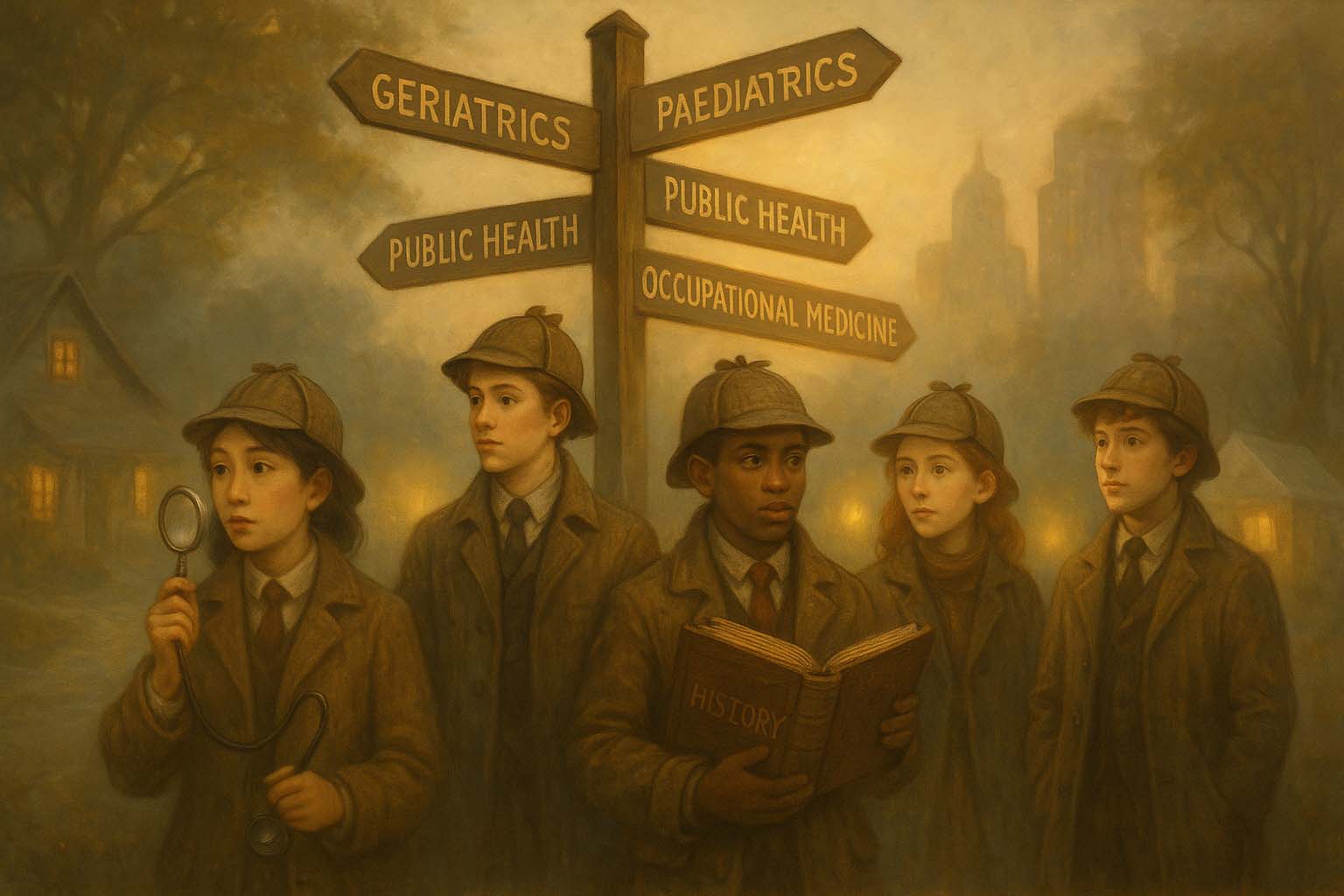
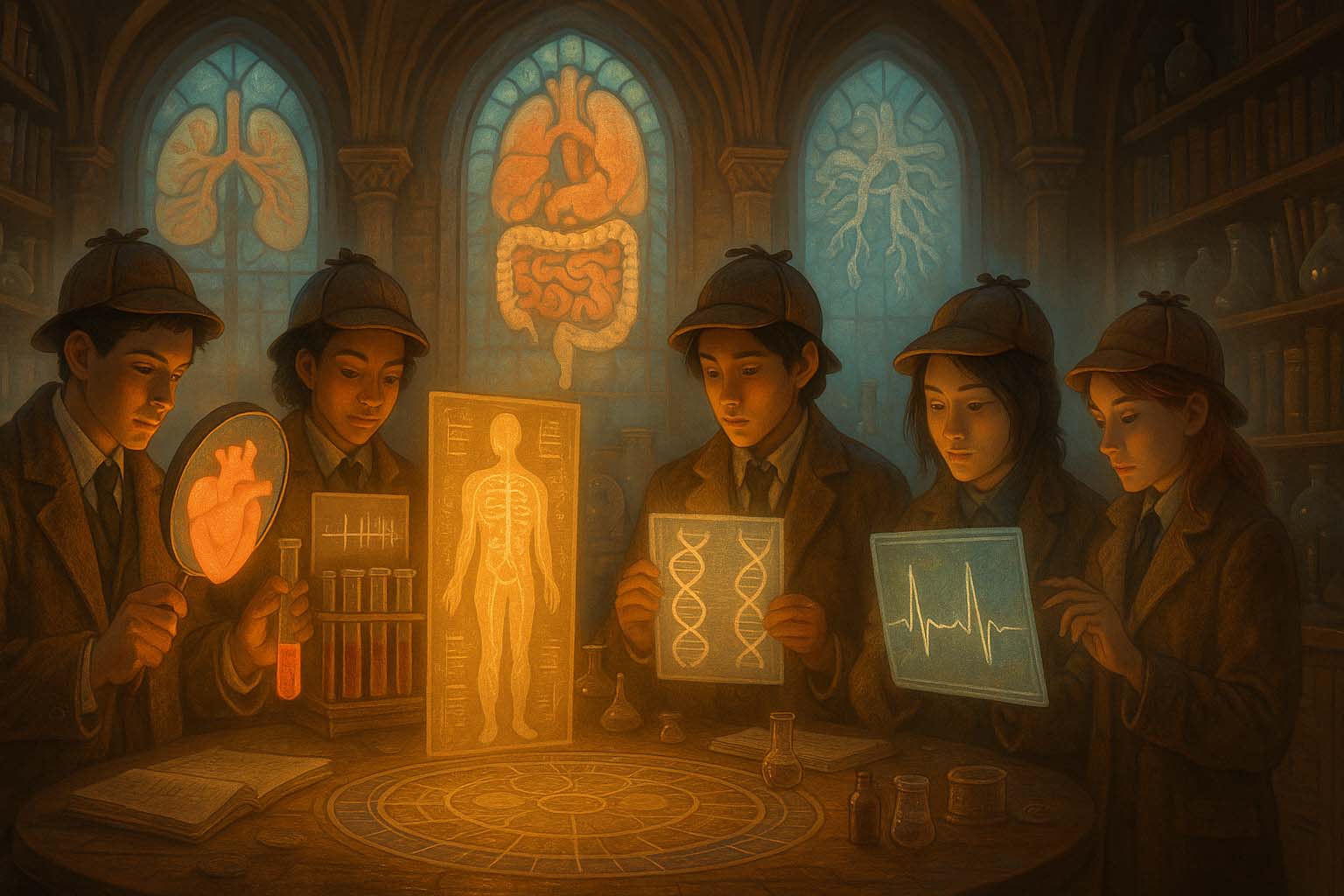
Step Into the Specialty Files: Explore Every Branch of Medicine - One Case at a Time
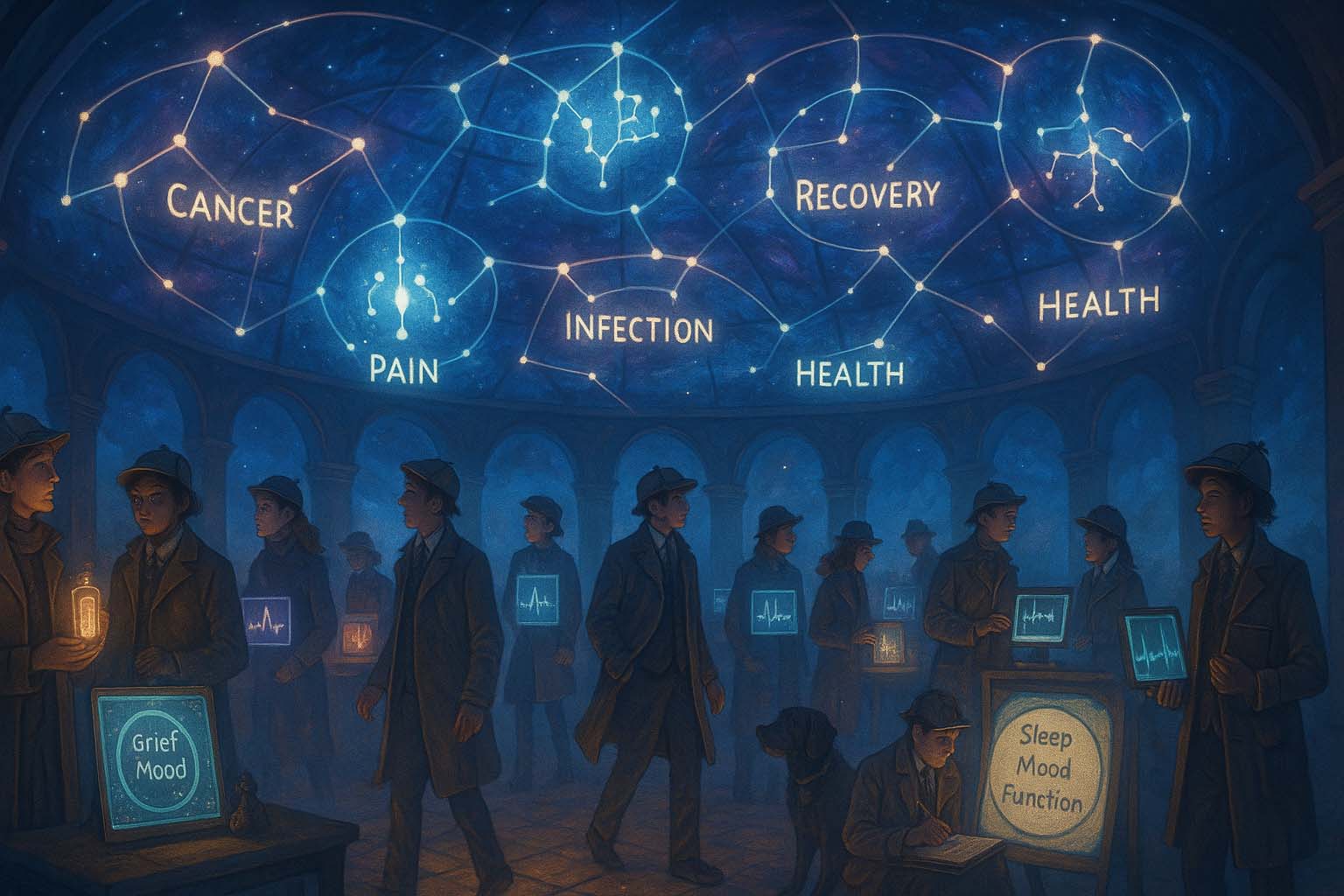
From broken bones to blurred vision, from hearts that race to minds in distress—discover how future doctors crack real clinical mysteries across every system.

Our Testimonials
Real med vibes.
It made me feel like a junior doctor before I even started.

Wow, just wow!
I actually enjoyed learning about diagnosis—it felt like a game, not a lecture.

Mind officially blown.
I never realised how much fun clinical reasoning could be.

Not just theory.
This helped me connect the dots between symptoms, science, and story.

Felt so ready.
Used one of the cases in my med school interview—they loved it!

So inspiring!
Medlock Holmes made me believe I could actually be a doctor one day.
