
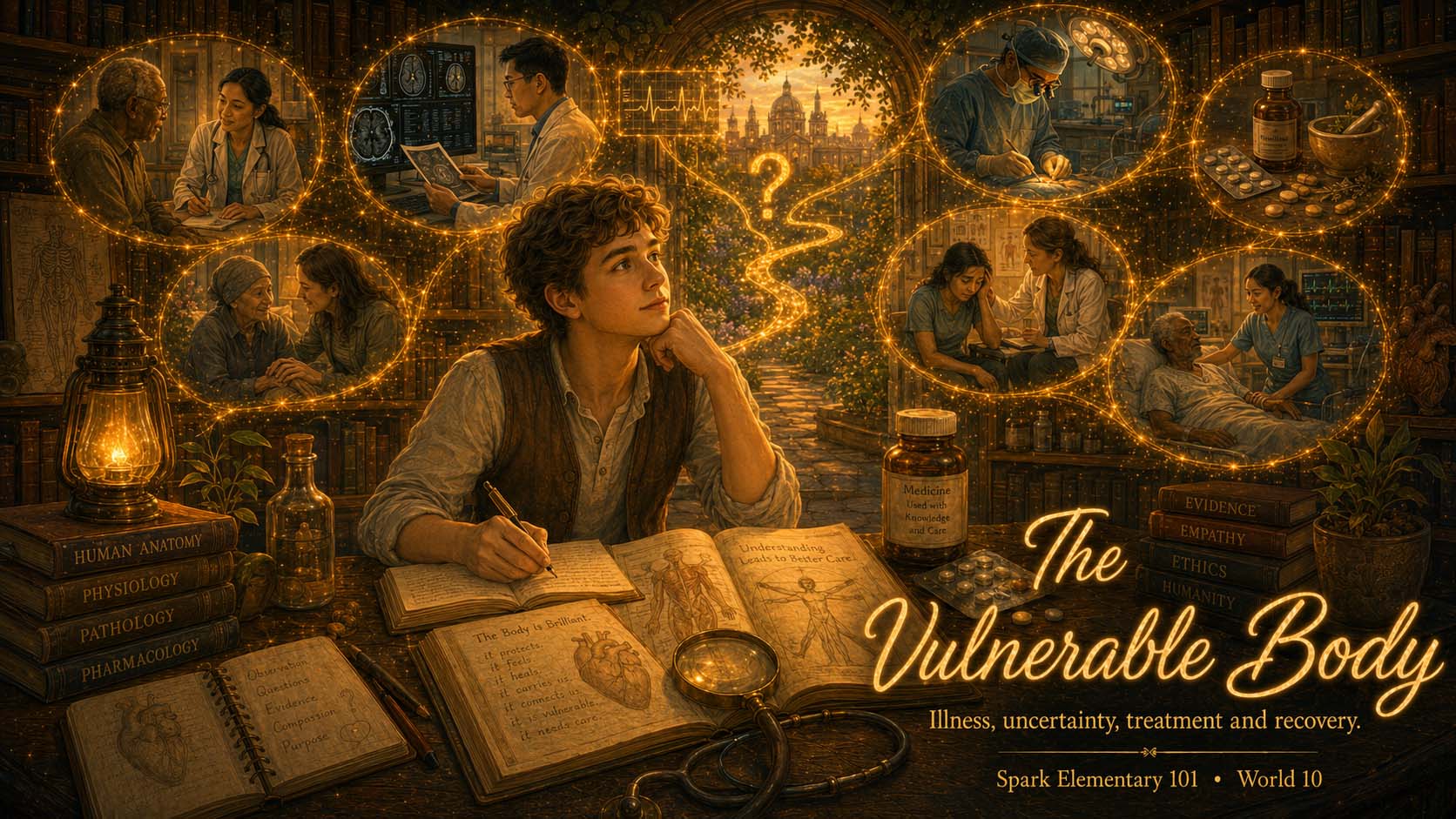
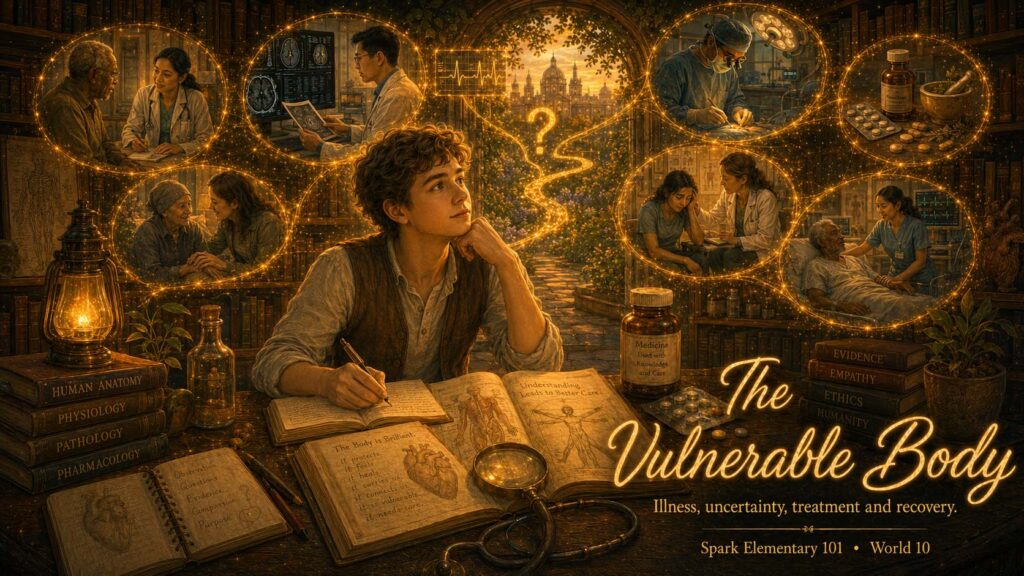
World 10: THE VULNERABLE BODY
How medicine recognises illness, chooses treatment and cares when cure is not possible
A person wakes with pain.
A child develops a fever.
A hand begins to tremble.
A familiar task suddenly becomes difficult.
Something has changed.
The patient experiences that change from the inside.
The clinician begins searching for clues from the outside.
They listen. Examine. Compare possibilities. Decide whether a test might help. Recommend treatment while knowing that every treatment carries uncertainty of its own.
A medicine may help one person and cause side effects in another.
An operation may restore function—or create risks greater than the original problem.
Sometimes medicine cures.
Sometimes it controls.
Sometimes it rehabilitates.
Sometimes it can only relieve suffering and remain beside the person.
How does medicine know what to do when the human body becomes vulnerable?
Enter the World
The Vulnerable Body is the final World of Elementary 101.
It is where curiosity about the human body begins to meet the actual practice of medicine.
The earlier Worlds explored how the body beats, breathes, thinks, senses, moves, defends, grows, adapts and changes.
Now a different question emerges:
What happens when one or more of those systems stop working as expected?
You will begin by asking why people become ill and why the same symptom can have many different causes.
You will enter the diagnostic process, discovering how doctors build explanations from stories, examinations, probabilities and imperfect tests.
You will explore why medicines produce side effects, why antibiotics cannot treat viruses, why expectation can change symptoms and why an operation that helps one person may harm another.
Finally, you will ask what recovery really means—and what remains for medicine when disease cannot be cured.
This World is not simply about finding what is wrong.
It is about deciding what might help—and remaining present when there is no perfect answer.
Four Paths Through the Vulnerable Body
Becoming Ill
Illness is rarely one simple event.
It may begin with infection, injury, inherited vulnerability, immune dysfunction, altered metabolism, environmental exposure or the gradual effects of time.
It may also emerge through the interaction of biology with work, housing, poverty, relationships, behaviour and chance.
Why do people become ill?
And why can the same illness enter two lives so differently?
Finding the Diagnosis
A symptom is not a diagnosis.
Pain, fatigue, dizziness, breathlessness or weakness may each arise from many different causes.
A doctor must listen to the story, understand the timeline, examine the person and create a list of possibilities.
Tests may help—but no test speaks with perfect certainty.
How does a clinician move from uncertainty towards a working explanation without becoming trapped by the first idea?
Treatment and Recovery
Treatment acts upon a living, interconnected body.
A medicine may influence several organs.
An antibiotic may treat bacteria while disrupting helpful microorganisms.
Expectation and trust may alter symptoms.
An operation may repair anatomy while leaving months of rehabilitation ahead.
Treatment is therefore never simply a question of whether something can be done.
It is a judgement about likely benefit, possible harm and what matters to the person.
The Limits of Medicine
Medicine cannot prevent every illness, restore every lost function or predict every outcome.
Some diseases can be cured.
Others can only be controlled.
Some people recover by returning towards their previous life.
Others recover by adapting to a life that has changed permanently.
When cure is no longer possible, medicine still has important work to do.
It can relieve suffering, communicate honestly, preserve dignity and ensure that vulnerability is not faced alone.
Ten Questions to Follow
ELM-091
Why do people become ill?
How do genes, infection, injury, immunity, environment, behaviour, ageing and chance disrupt the body’s ability to maintain health?
ELM-092
Why can the same symptom have many causes?
Why might breathlessness arise from the lungs, heart, blood, brain, physical fitness, anxiety—or several of these together?
ELM-093
How does a doctor know what is wrong?
How does a clinician transform a patient’s story, examination findings and changing clues into a working diagnosis?
ELM-094
Why can medical tests be uncertain or wrong?
Why can a positive result occur without disease, a normal result miss illness and a scan reveal something that was never causing the symptoms?
ELM-095
Why do medicines have side effects?
Why can a treatment designed to help one problem also affect digestion, alertness, blood pressure, movement or another part of the body?
ELM-096
Why do antibiotics not work against viruses?
Why do medicines that target bacterial structures have nothing useful to attack in a virus?
ELM-097
Why does the placebo effect exist?
How can expectation, learning, reassurance and the meaning surrounding treatment change real experiences such as pain, nausea and fatigue?
ELM-098
Why can surgery help one person but not another?
Why must the diagnosis, anatomy, likely benefit, risk, alternatives and the person’s goals all align before an operation becomes the right choice?
ELM-099
Why does recovery not always mean returning to how things were before?
Can someone rebuild function, identity and a meaningful life even when illness or injury has created permanent change?
ELM-100
Why can medicine not cure everything?
What can medicine still offer when disease cannot be removed and life cannot be returned to exactly how it was?
Illness Is Not One Thing
Illness is often imagined as an external enemy entering a previously healthy body.
Sometimes that is what happens.
A virus crosses a boundary.
A bacterium multiplies.
A toxin damages tissue.
A bone breaks.
But illness may also develop gradually through:
inherited susceptibility
immune misdirection
hormonal disruption
altered metabolism
environmental exposure
degeneration
ageing
accumulated risk
or chance
There may be no single moment when health ends and illness begins.
A disease may develop silently for years before producing symptoms.
Someone may also feel profoundly unwell before medicine can identify one clear biological cause.
This reveals three overlapping ideas.
Disease is a biological or pathological process.
Illness is the person’s lived experience of being unwell.
Sickness is the social meaning and expectations attached to being unwell.
A person may possess disease without feeling ill.
Another may feel deeply ill while tests remain normal or uncertain.
Good medicine must attend both to biology and to experience.
The Same Symptom Can Open Many Doors
Imagine five people who are breathless.
One has asthma.
One has pneumonia.
One has anaemia.
One has heart failure.
One has become frightened and is breathing rapidly during a panic attack.
Their experience may sound similar.
The mechanism is not.
A symptom is therefore not an answer.
It is the beginning of an investigation.
The meaning of a symptom depends upon its story.
When did it begin?
Was the onset sudden or gradual?
What was the person doing?
What makes it better or worse?
What other changes occurred?
What has happened before?
What medicines are being taken?
What does the person fear the symptom might mean?
Medicine cannot understand a symptom by looking only at the organ in which it is felt.
The body, mind and life around the person all contribute clues.
Diagnosis Is a Working Explanation
A doctor rarely begins by knowing exactly what is wrong.
They begin with possibilities.
They listen to the patient’s account.
They clarify the sequence of events.
They examine the body.
They identify patterns.
They ask which explanation is most likely and which dangerous possibility must not be missed.
This creates a differential diagnosis: a reasoned list of possible causes.
The list changes as new information appears.
A diagnosis may become more likely.
Another may become less likely.
An unexpected clue may require the whole explanation to be reconsidered.
Changing a diagnosis is not always evidence that someone made a mistake.
Diseases reveal themselves over time.
Symptoms evolve.
New evidence appears.
Good clinical reasoning does not defend its first theory at all costs.
It asks what evidence might prove that theory wrong.
The Patient Is Not a Puzzle
Medicine is often compared with detective work.
The comparison is useful.
Clinicians:
observe
listen
look for patterns
test hypotheses
notice inconsistencies
and revise conclusions
But a medical mystery is not a fictional case.
It is happening to someone.
The person may be frightened, exhausted, ashamed, grieving or in pain.
They may struggle to describe what is happening.
They may fear that they will not be believed.
They may worry that the diagnosis will change their family, future or identity.
The patient is therefore not an object from which clues are collected.
The patient is a person to be understood and helped.
Clinical curiosity must be accompanied by respect.
Questions must illuminate rather than interrogate.
Examination requires permission.
The search for diagnosis must never erase the person experiencing it.
Tests Are Clues, Not Verdicts
A blood test is positive.
Does that prove disease?
A scan is normal.
Does that prove health?
Medical tests are measurements, and every measurement has limits.
A test may produce a false positive, suggesting disease when none is present.
It may produce a false negative, appearing normal when illness is present.
Its meaning also depends upon how likely the disease was before the test was performed.
A positive result for a rare condition in a healthy person may have a different meaning from the same result in someone with a highly suggestive history.
Tests can also discover abnormalities unrelated to the original problem.
Some of these findings matter.
Others would never have caused symptoms or harm.
Yet they may lead to anxiety, repeated scans, invasive procedures or unnecessary treatment.
More information does not always create more clarity.
Before ordering a test, a careful clinician asks:
What will I do differently depending upon the result?
The test must serve the clinical question.
The clinical question should not be invented merely because a test exists.
Treatment Is a Choice Under Uncertainty
Once a diagnosis has been reached, another decision begins.
Should the condition be treated?
Which treatment offers the greatest likelihood of benefit?
What harm might it cause?
What alternatives exist?
What happens if nothing is done?
What matters most to the patient?
Treatment is not simply the application of medical knowledge.
It is a decision made under uncertainty.
Evidence may show what happens on average.
But the clinician and patient must decide what that evidence means for one individual life.
A treatment that offers a small chance of benefit with substantial side effects may be worthwhile to one person and unacceptable to another.
There may be no single correct choice outside the person’s values.
Good treatment is not merely technically possible. It must also be personally meaningful.
Medicines Enter Whole Bodies
A medicine may be prescribed for one purpose.
But it does not travel only to the part of the body where the problem exists.
After being absorbed, it may circulate through many organs.
Its target may be found in several tissues.
A receptor involved in pain may also influence alertness.
A chemical pathway involved in mood may also affect digestion or sexual function.
A medicine that lowers blood pressure may also produce dizziness.
A drug that reduces inflammation may also alter immunity or the stomach lining.
People also differ in how medicines are absorbed, metabolised and removed.
Age, genes, body composition, pregnancy, liver function, kidney function and other medicines can all change the response.
Side effects are therefore not evidence that treatment is inherently bad.
They reveal that medicines act inside interconnected systems.
The clinical task is to balance:
the intended benefit
the unintended effects
the dose
the alternatives
and the person’s experience
A prescription describes what was intended.
Only the patient can describe what happened after taking it.
Not Every Infection Needs an Antibiotic
Bacteria are cells with structures and processes that antibiotics can target.
They possess features such as cell walls, ribosomes and metabolic pathways.
Viruses are different.
They enter human cells and use the machinery inside those cells to reproduce.
They do not possess many of the bacterial structures that antibiotics attack.
Giving an antibiotic for a viral infection therefore does not make the treatment stronger.
It simply gives the medicine no appropriate target.
Unnecessary antibiotics may still cause:
nausea
diarrhoea
allergic reactions
disruption of helpful microorganisms
and antimicrobial resistance
Resistance develops in bacteria—not in the person taking the medicine.
Bacteria that survive antibiotic exposure may multiply and spread.
A decision not to prescribe is therefore not necessarily a refusal to help.
It may be an act of careful diagnosis, safety-netting and responsibility to the wider community.
Meaning Can Change Symptoms
A person takes a tablet they believe will reduce pain.
The tablet contains no active pain medicine.
Yet the pain may improve.
Does that mean the pain was imaginary?
No.
Expectation, previous learning, attention, reassurance and the therapeutic relationship can influence brain and body systems involved in:
pain
nausea
fatigue
anxiety
movement
and autonomic activity
This is part of the placebo effect.
Negative expectations may also intensify symptoms or increase awareness of side effects. This is sometimes called a nocebo effect.
These effects do not mean that thought can eliminate every disease.
Expectation cannot reliably remove an infection, mend a fracture, replace insulin or cure most cancers.
But it can alter how symptoms are processed and experienced.
The lesson is not that clinicians should deceive people.
It is that honest explanation, trust, reassurance and realistic hope are themselves parts of treatment.
The meaning surrounding care can change what care does.
Medicine Treats the Person Who Owns the Scan
Two people have similar changes on a scan.
One is offered surgery.
The other is advised to continue with rehabilitation or medication.
Why?
An operation is valuable only when several conditions align.
Is there a structural problem that surgery can correct?
Are the symptoms actually being caused by that problem?
What benefit is realistically expected?
What risks does the operation carry?
What alternatives exist?
Can the person withstand the operation and rehabilitation?
What outcome matters most to them?
A scan may show disc changes, arthritis, cysts or small tears in someone who has no symptoms at all.
An abnormality can be real without being the cause of the person’s difficulty.
Repairing anatomy also does not guarantee recovery.
The operation may be only the beginning.
Healing may still depend upon:
pain control
nutrition
movement
physiotherapy
mental health
family support
and time
Medicine treats the person who owns the scan—not the scan by itself.
Recovery Is Not Always a Return Journey
After illness or injury, people are often told that they are recovering.
But what if:
a limb has been lost?
memory has changed?
pain continues?
energy never fully returns?
the condition is chronic?
life now requires medication, equipment or support?
Can recovery still occur?
Recovery has several meanings.
Biological recovery may involve disease resolving and tissue function returning.
Functional recovery may involve regaining the ability to perform important activities.
Psychological recovery may involve restoring confidence, identity and hope.
Social recovery may involve reconnecting with family, education, work and community.
Personal recovery may involve living a meaningful and self-directed life even when symptoms or vulnerability remain.
A person may recover through a different route.
Someone with vision loss may use audio technology and mobility training.
A person after a stroke may learn new strategies.
Someone who has lost a limb may use a prosthesis while adapting to changes in body image and identity.
Recovery is not always a journey backwards towards the person one was.
Sometimes it is a journey forwards into a new way of living.
Cure and Recovery Are Not the Same
A person may be cured but not yet recovered.
An infection may be eliminated while weakness, fear or traumatic memories remain.
A tumour may be removed while the person continues living with pain, fatigue or uncertainty about recurrence.
Another person may never be cured, yet recover purpose, participation and hope.
They may return to work.
Rebuild relationships.
Learn new skills.
Adapt their environment.
Rediscover a valued role.
The clinician must therefore ask more than:
Has the disease gone?
They must also ask:
What does this person want to be able to do again?
The meaningful outcome may be walking to the garden.
Playing music.
Returning to school.
Caring for a child.
Sleeping without pain.
Or spending time at home with family.
Medicine becomes personal when recovery is measured against the life the person values.
Medicine Has Limits
Medicine can transplant organs, replace joints, treat infections and support babies born far too early.
Yet it cannot cure every disease.
Some conditions remain poorly understood.
Some diseases are detected too late.
Some tissues, including parts of the brain, spinal cord and heart, repair poorly after severe injury.
Some treatments cannot reach every diseased cell without damaging healthy tissue.
Bacteria and cancer cells can evolve resistance.
A technically possible treatment may be too burdensome for a frail person or may not align with the patient’s wishes.
And every human life remains finite.
Death is not always evidence that medicine has failed.
If success is defined only as cure, medicine will eventually fail everyone.
Its work must therefore be larger.
When Cure Is Not Possible
Medicine may have several different goals.
Cure
Remove the disease.
Control
Reduce its activity or slow its progression.
Prevention
Reduce the likelihood of illness or complications.
Rehabilitation
Restore function or develop new ways of living.
Palliation
Relieve suffering and support quality of life.
Accompaniment
Remain present through uncertainty, deterioration, grief and death.
Palliative care is not limited to the final hours or days of life.
It can be offered alongside active treatment.
It may address:
pain
breathlessness
nausea
anxiety
communication
family support
planning
dignity
and questions of meaning
When cure is no longer possible, the central question changes.
It is no longer only:
How do we defeat the disease?
It becomes:
How do we care well for the person living with it?
Hope Can Change Its Shape
Honesty does not necessarily destroy hope.
It may change what hope is asking for.
Hope may move from cure to more time.
From more time to comfort.
From hospital to home.
From another treatment to attending an important occasion.
From avoiding death to being free from pain or fear.
From protecting oneself to preparing one’s family.
Good medicine does not offer false certainty.
Nor does it abandon the person when the possibilities narrow.
It helps people understand what is happening, make choices and identify what matters most now.
Sometimes hope is not the belief that everything will be restored.
It is the belief that something meaningful remains possible.
Uncertainty Is Part of the Work
Becoming a doctor does not make uncertainty disappear.
A clinician may have to act while knowing that:
the diagnosis could change
a test may mislead
a treatment might fail
side effects may emerge
recovery may be incomplete
and the future cannot be predicted exactly
The discipline of medicine lies in responding to that uncertainty with:
evidence
reasoning
humility
honesty
responsibility
and compassion
Confidence does not mean pretending to know everything.
Humility does not mean being unable to act.
The clinician must be able to say:
This is what I think is happening.
This is why I think it.
This is what remains uncertain.
This is what I recommend.
This is what we will do if the situation changes.
Honesty becomes a form of safety.
Presence becomes a form of care.
The Calling Question
You have followed a person from the first experience of illness into diagnosis, testing and treatment.
You have seen why symptoms can mislead, why tests are imperfect and why every intervention must balance possible benefit against possible harm.
You have watched medicine prescribe, operate, rehabilitate, relieve and accompany.
And you have reached the place where cure is no longer guaranteed.
What draws you closer?
Is it the detective work of diagnosis?
The challenge of reasoning under uncertainty?
The science of medicines and surgery?
The possibility of restoring function?
The human work of shared decision-making?
The courage required to communicate difficult truths?
Or the responsibility to remain beside someone when there is no test, treatment or operation that can make everything right?
Am I drawn not only towards understanding illness, but towards standing beside people when certainty and cure are not possible?
Pause for a moment.
Medicine is not only about whether you are fascinated by the body.
It is also about what you do when another human being places their vulnerability in your hands.
Begin World Ten
Start with ELM-091: Why do people become ill?
Something has changed.
The patient has noticed.
Now the work of medicine begins.
At the End of the Tenth World
You began Elementary 101 by asking:
Could medicine be my calling?
One hundred questions have shown you what medicine asks.
They have taken you through rhythm, energy, thought, perception, movement, defence, growth, adaptation, illness and healing.
They have shown you medicine’s knowledge.
They have also shown you its uncertainty, responsibility and limits.
The one hundred and first question now asks what you will answer:
Is medicine my calling?
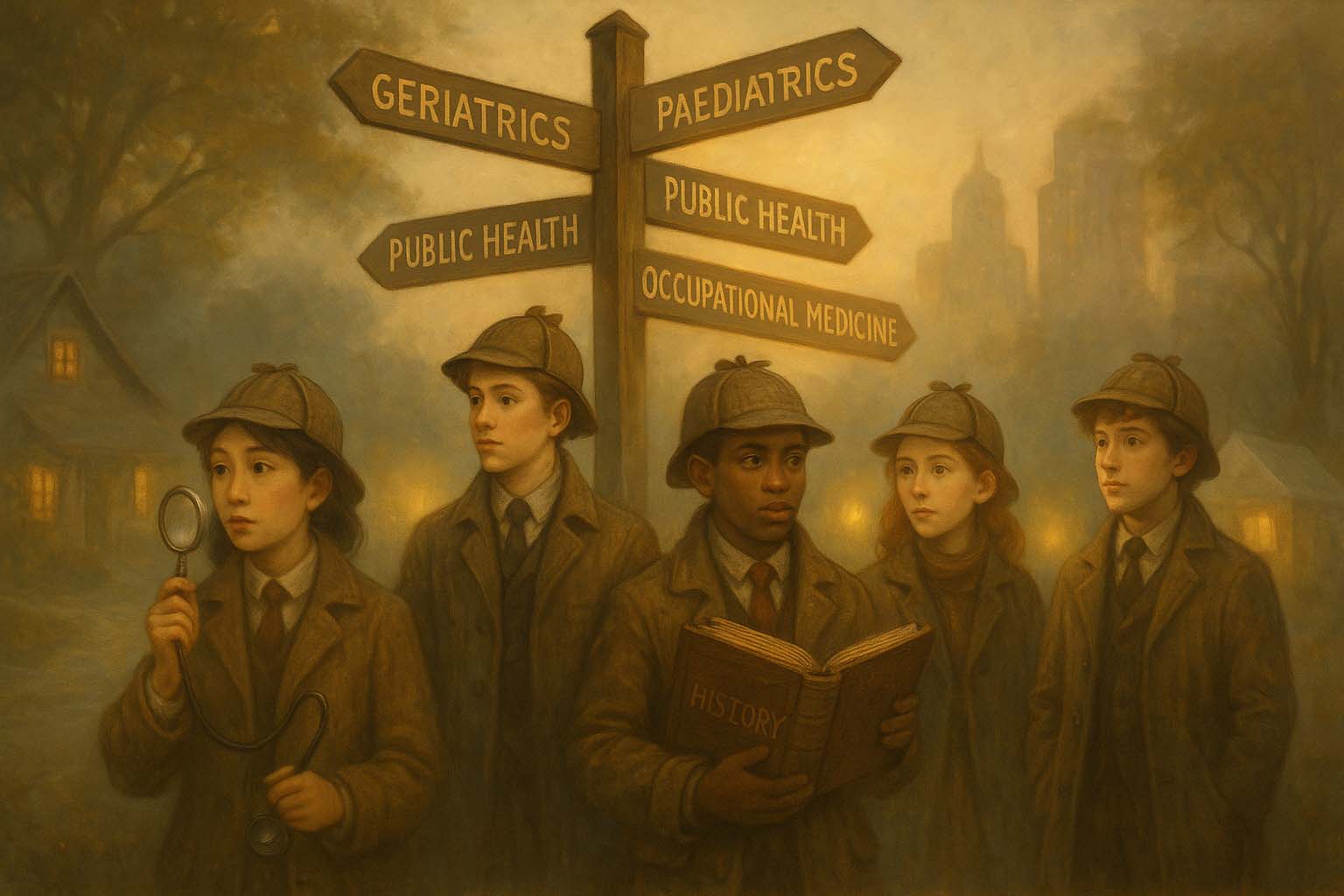
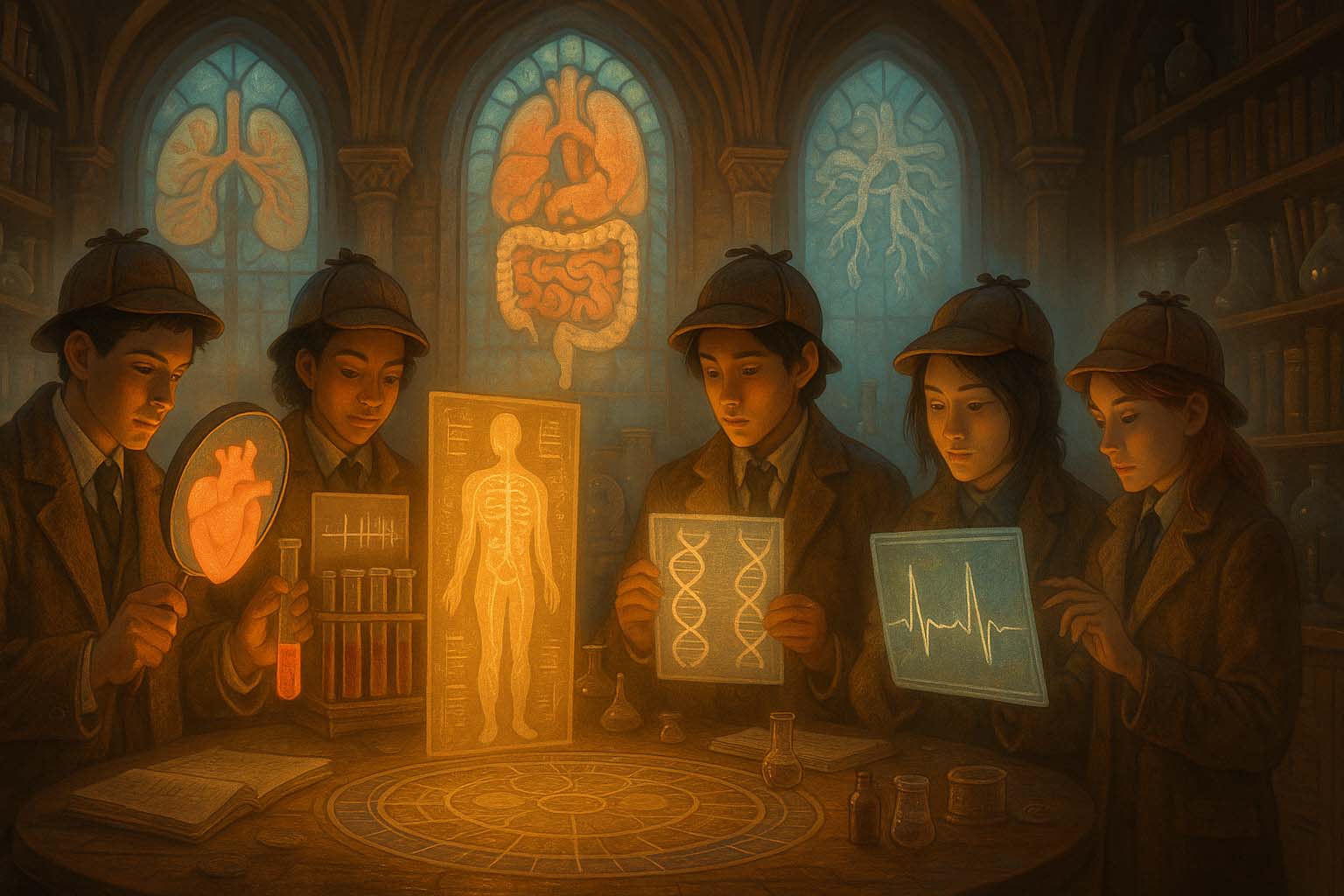
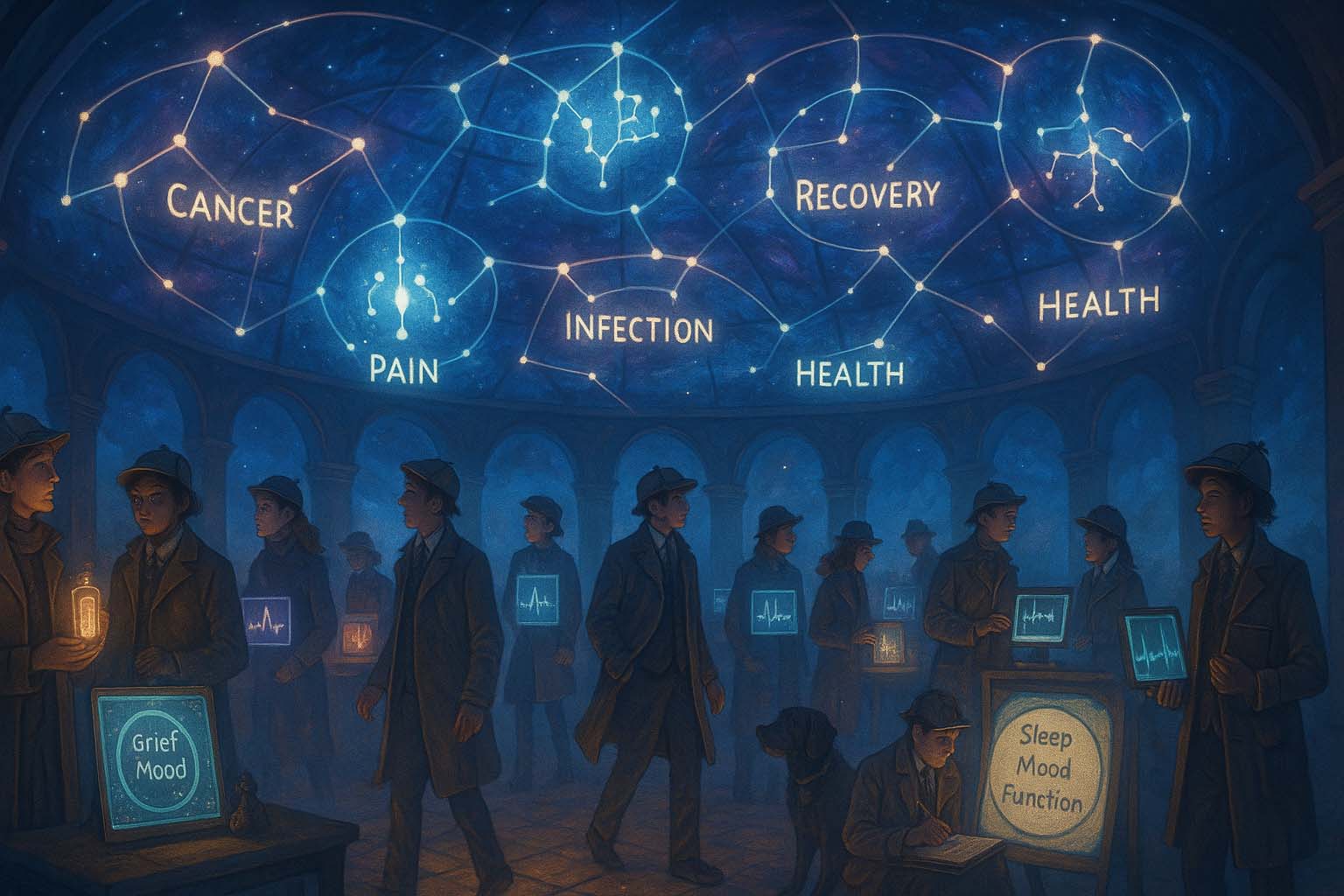
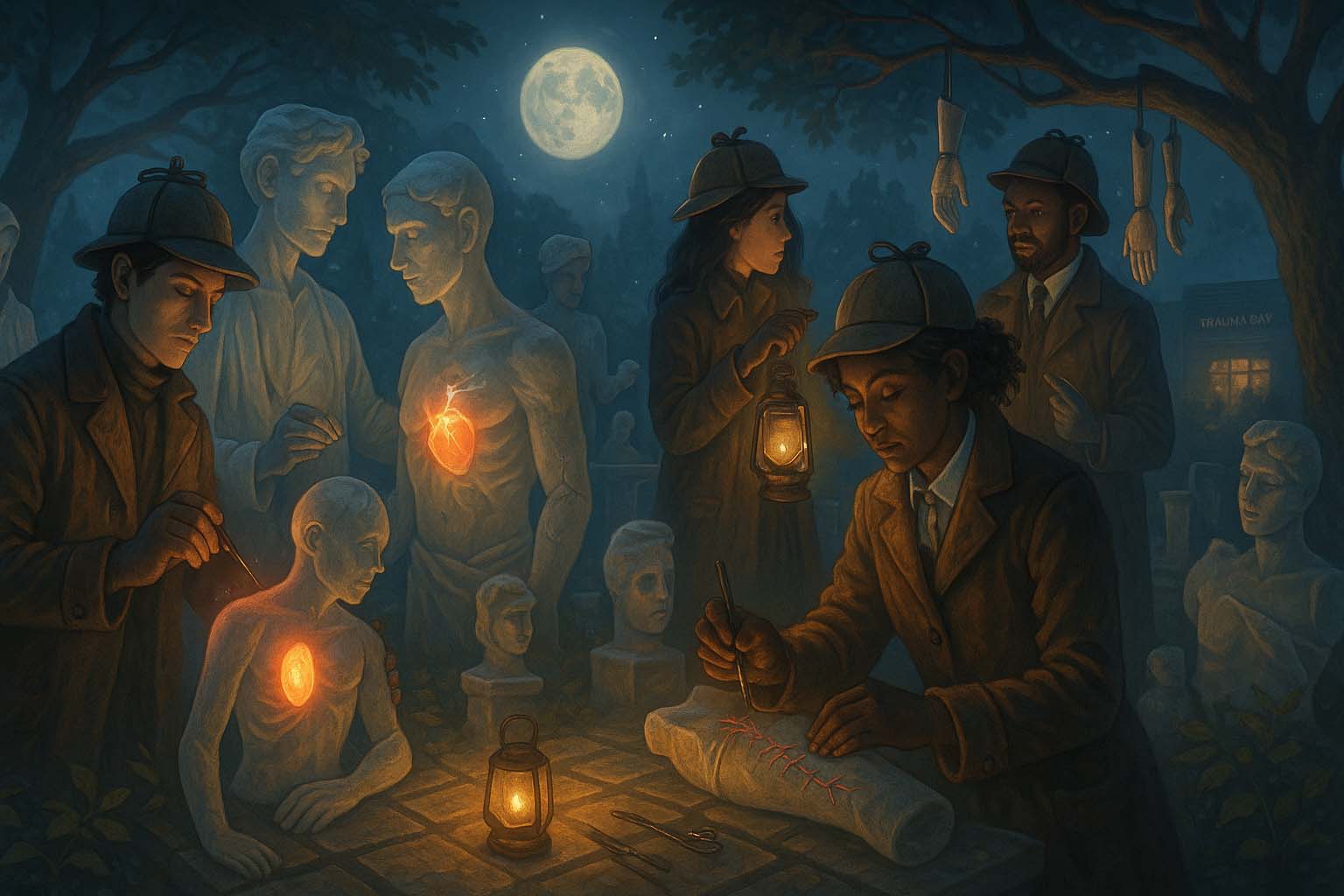
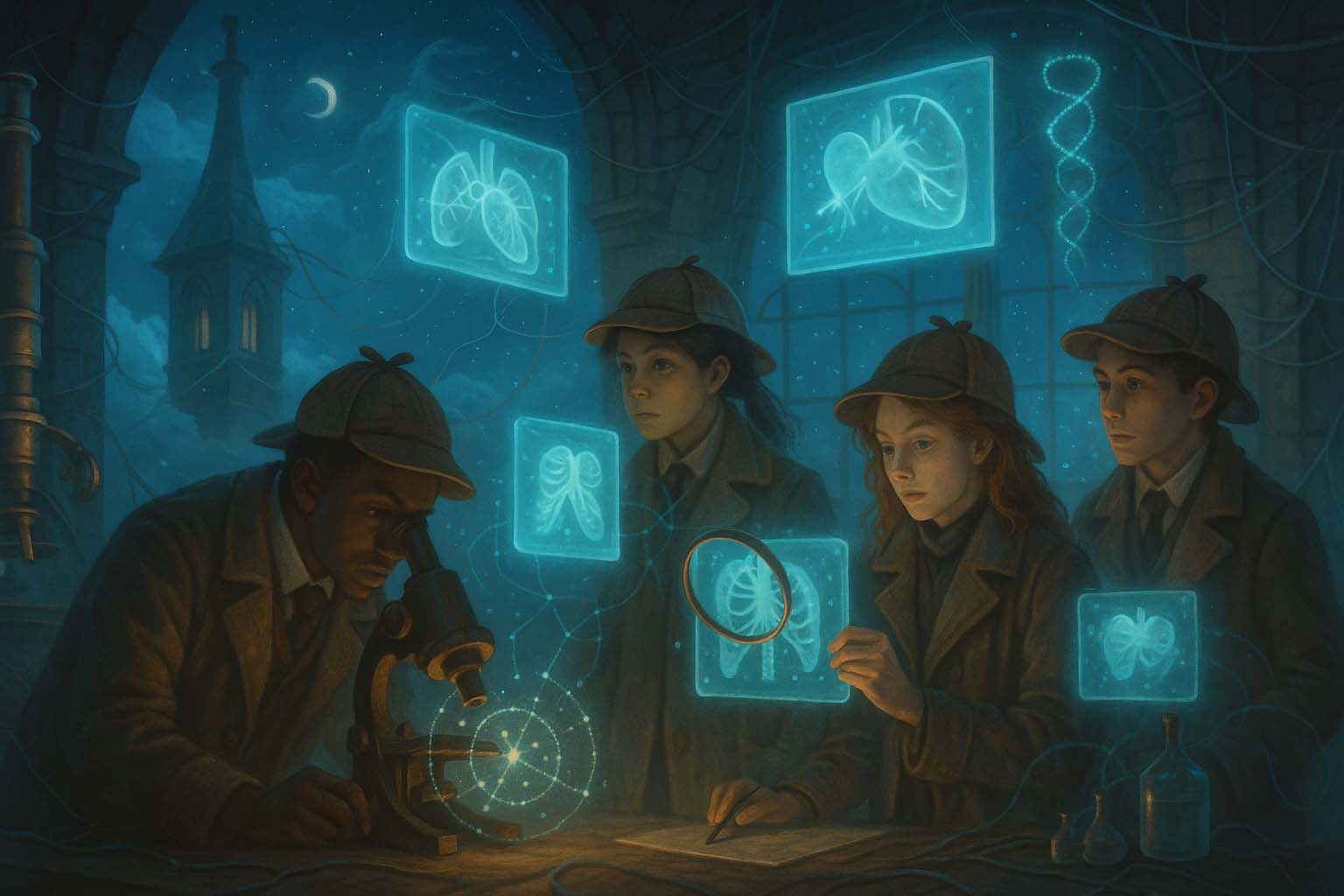
Step Into the Specialty Files: Explore Every Branch of Medicine - One Case at a Time
From broken bones to blurred vision, from hearts that race to minds in distress—discover how future doctors crack real clinical mysteries across every system.
Our Testimonials
Real med vibes.
It made me feel like a junior doctor before I even started.

Wow, just wow!
I actually enjoyed learning about diagnosis—it felt like a game, not a lecture.

Mind officially blown.
I never realised how much fun clinical reasoning could be.

Not just theory.
This helped me connect the dots between symptoms, science, and story.

Felt so ready.
Used one of the cases in my med school interview—they loved it!

So inspiring!
Medlock Holmes made me believe I could actually be a doctor one day.
