
Plastic Surgery
- Posted by admin
- Categories Reconstructive, Transplant & Trauma Surgery
- Date May 24, 2025
- Comments 0 comment
The Reconstructive Detective’s Domain – Cracking the Cases of Form, Function, and the Beauty of Repair
1. Introduction: The Scene of the Specialty
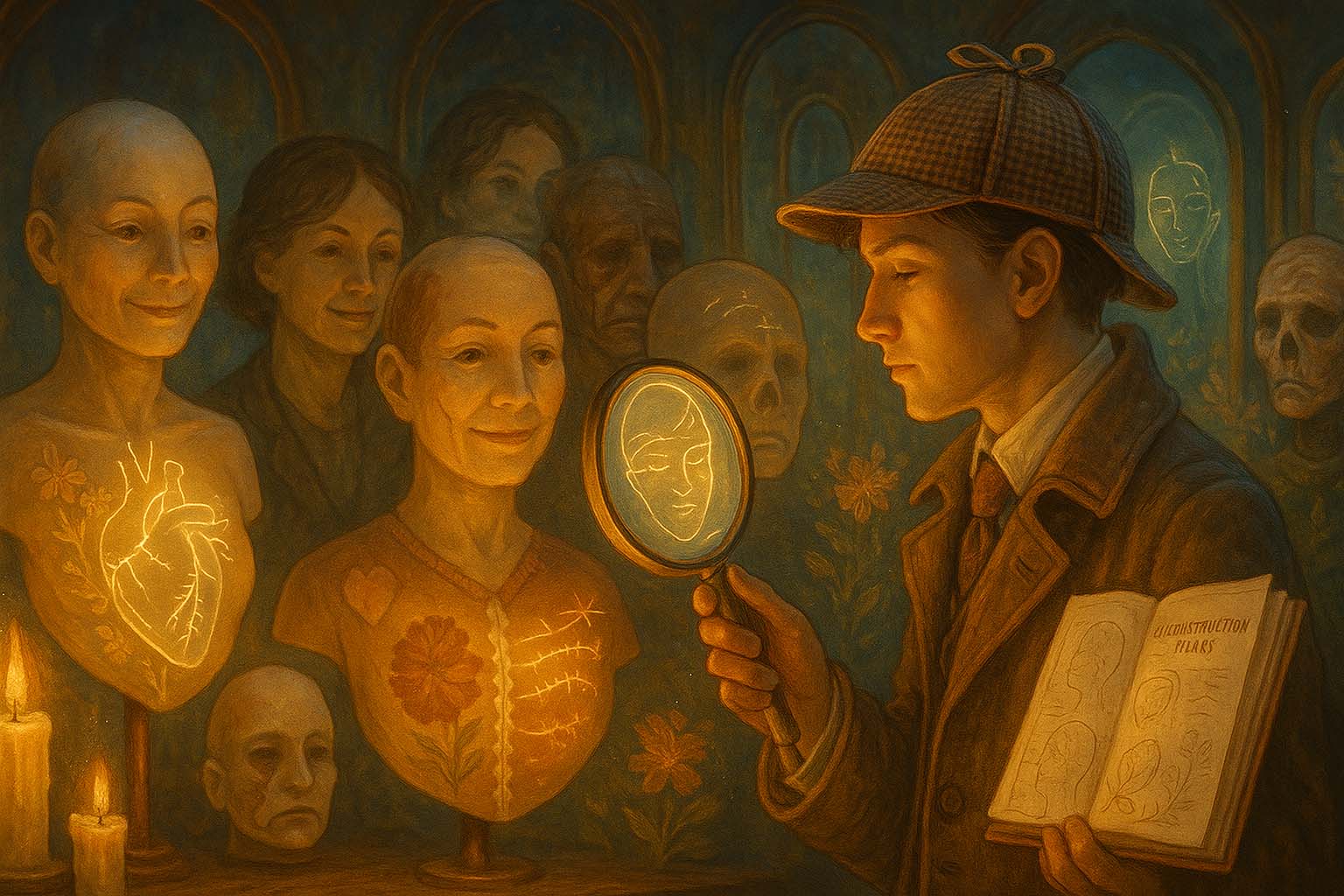
Step into the shoes of a Plastic Surgery sleuth.
This is the specialty of subtlety and structure—where the goal is not just to heal, but to restore. Plastic surgeons repair what trauma, disease, or time has altered, often turning the broken into something beautifully functional. Their cases span skin, bone, nerve, and emotion. From complex reconstructions to delicate cosmetic refinement, they are artists with anatomy. Welcome to a world where every scar has a story, and the surgeon’s work becomes invisible when done best.
2. Key Mysteries They Solve (Common Conditions)
These detectives specialise in solving cases involving:
- Trauma & Wound Repair – restoring form after burns, lacerations, and degloving injuries.
- Reconstructive Surgery – after cancer (e.g., breast, head & neck) or congenital anomalies (e.g., cleft palate).
- Microsurgery & Nerve Repair – reconnecting vessels, nerves, and tissue under a microscope.
- Aesthetic Surgery – addressing appearance-related concerns with psychological and physical care.
Each case blends technical brilliance with psychological insight—repairing the seen and the unseen.
3. Their Trusted Tools & Techniques
Every detective has their kit—and in Plastic Surgery, tools may include:
- Microsurgical Instruments – operating on vessels and nerves finer than thread.
- Tissue Flaps & Grafts – relocating and reshaping tissue to rebuild anatomy.
- Laser, Sutures, and Fine Blades – sculpting the skin with minimal trace.
- 3D Imaging & Pre-Surgical Modelling – visualising symmetry and optimal outcomes.
This is precision work—where millimetres matter and vision shapes outcome.
4. The Charms of This Field: Why It Captivates the Curious
- Creative Problem-Solving: Every reconstruction is a unique puzzle.
- Cross-Disciplinary Reach: Work with trauma teams, oncologists, paediatricians, and orthopaedics.
- Visible, Tangible Results: See your work evolve from injury to restoration.
- Balance of Art and Science: Where technical mastery meets aesthetic sensitivity.
This is medicine as craftsmanship—delicate, deliberate, and deeply human.
5. Challenges: The Toughest Cases They Face
- Emotional Weight of Identity: Many patients seek not just healing, but self-acceptance.
- Functional vs Cosmetic Expectations: Balancing patient goals with medical realities.
- Long, Complex Surgeries: Replantations, flaps, and reconstructions can span many hours.
- Social Judgment & Stigma: Misunderstandings about cosmetic work versus clinical need.
But the seasoned plastic surgeon knows: restoring form can restore function, confidence, and connection.
6. Famous Cases and Hallmark Clues
- The “Classic Presentation” – Full-thickness facial laceration from trauma: layered closure with aesthetic lines.
- The “Zebra” – Post-mastectomy pain and body image distress: reconstructive breast surgery with nerve preservation.
- The “Aha Moment” – Realising a chronic non-healing wound needs a rotational flap, not just dressing changes.
7. Your Training Trail: How to Join the Investigation
To become a Plastic Surgery detective:
- Master foundational surgical techniques—then refine them into microscopic artistry.
- Study anatomy in high resolution—nerves, vessels, angles, and aesthetics.
- Train in burns, trauma, hand surgery, and reconstructive oncology.
- Develop emotional intelligence—healing appearance is also healing identity.
Whether repairing a crushed hand or refining a rhinoplasty, you’ll be restoring dignity through detail.
8. Final Words: The Signature of the Plastic Surgery Detective
Plastic surgery detectives turn trauma into transformation.
They work where tissue and story intersect—rebuilding what disease took, injury stole, or time reshaped.
They restore hands to grasp, faces to smile, and bodies to belong again.
So if you are drawn to the meticulous, the meaningful, and the artful side of surgery—then this is your operating theatre of healing and hope.